About
About This Archive of Turkish Art and History, 600 to 1600
What is here, how it is written, how images are handled and how to send a correction. The writing is descriptive rather than promotional, and where the scholarship is unsettled the text says so instead of choosing a side for the sake of a clean sentence.
This site is an online record of Turkic and Turkish art, history and material culture between 600 and 1600. It was built around the material assembled for the exhibition Turks: A Journey of a Thousand Years, 600-1600, held at the Royal Academy of Arts in London in 2005.
What is here
A chronology of the whole period; accounts of the four main peoples and dynasties; a section on architecture; and a set of object entries covering ceramic, steel, brass, bronze, silk and paper.
Editorial approach
The writing is descriptive rather than promotional, and where scholarship is unsettled the text says so rather than choosing a side for the sake of a clean sentence. Attributions that are contested are described as contested. Dates that are approximate are given as approximate.
Images
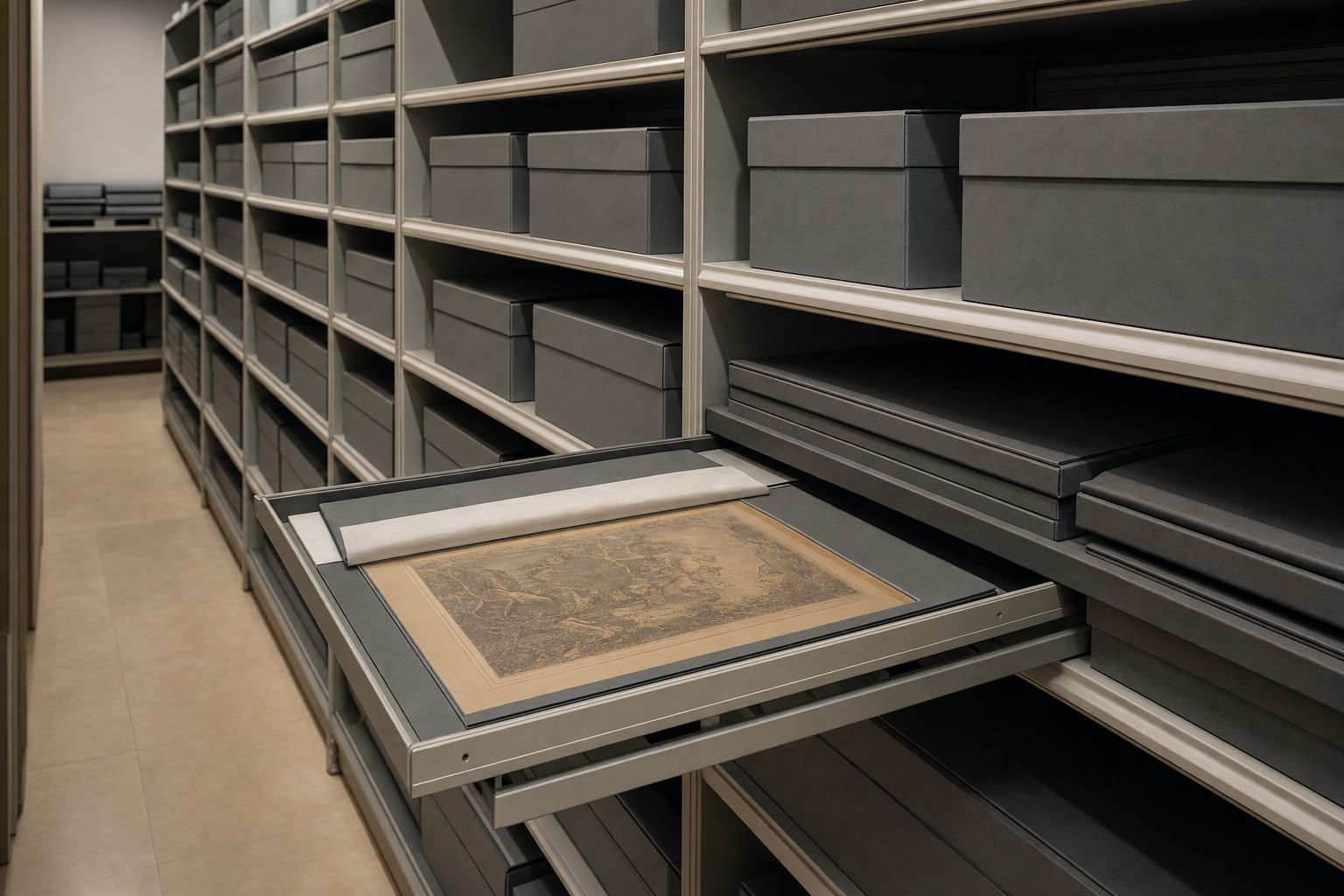
Where a specific historical work is shown, it is a public-domain reproduction and is credited in the caption. Other images on the site are illustrative and are not presented as records of particular accessioned objects.
Alongside the main sections
Three subjects cut across the chronology and have pages of their own: carpets and kilims, the named makers behind a mostly anonymous art, and the Ottoman table. For seeing the material in person there is a guide to the collections.
Why the period stops where it does
Six hundred is the earliest point at which the written and material record is dense enough to describe a Turkic visual culture rather than infer one, and the Orkhon inscriptions of the 730s are the first substantial texts in a Turkic language. Sixteen hundred is the harder boundary. Nothing ended in that year, but the century that follows belongs to a different account: the court style consolidates, the workshop system that produced it is reorganised, and the questions a reader brings to the material change from how a tradition formed to how an established one was maintained. A cut has to fall somewhere, and it falls where the subject changes character rather than where a dynasty does.
Sources
Entries are built from published catalogue scholarship, museum collection records and the standard surveys of each medium, and they follow the attribution given by the holding institution unless a later publication has revised it. Where two institutions describe comparable objects differently, both readings are given. Measurements, dates and inscriptions are reported as the collection reports them; where a date is a workshop range rather than a year, it is written as a range. Nothing here rests on a single source that cannot be checked against another.
What is not covered
The record stays with objects, buildings and the trades that made them. Modern political questions about the peoples named in these pages fall outside it, and so does the long argument about national inheritance that has attached itself to some of this material since the nineteenth century. The pages describe what was made, where, from what, and by which method. Readers looking for a position on anything beyond that will not find one here, and that is deliberate.
How the sections relate
The chronology is the spine and everything else hangs off it. A reader who arrives at an object entry can move up to the dynasty that produced it, and from the dynasty out to the architecture or the trade that shares its methods. That is the order the material was arranged in for the 2005 show, and it holds up because the inheritance really does run that way: each stage takes something from the one before it and changes it. Reading the sections in isolation works, but the connections are where the subject becomes legible.
Corrections
Material of this kind accumulates errors. Corrections and substantive queries are welcome through the details on the imprint page.
Common questions
Who runs this site?
Contact and responsibility details are on the imprint page. Editorial queries and corrections are welcome through the same address.
Is the content checked?
Where scholarship is unsettled the text says so rather than choosing a side. Contested attributions are described as contested and approximate dates are given as approximate.
Can the images be reused?
Reproductions of specific historical works shown here are public domain and credited in their captions. Other images are illustrative and are not records of particular objects.
Does the site cover the period after 1600?
No. It stops where the visual tradition it describes changes character, at the end of the sixteenth-century Ottoman court style.