Chronology
A Journey of a Thousand Years: The Full Chronology of the Turkic Peoples, 600-1600
Four peoples, a thousand years and roughly four thousand kilometres, set out in the order it happened. The periods overlap, the geography moves without abandoning anything behind it, and the art survives three changes of religion largely intact. What follows is the sequence, the dates that actually turn it, and a table setting the five stages side by side.
A millennium in time
600 to 1600, one stage at a time
Move along the line. Each stop opens the period below it, with what changed, what was made and where to read the whole account.
Early Turks
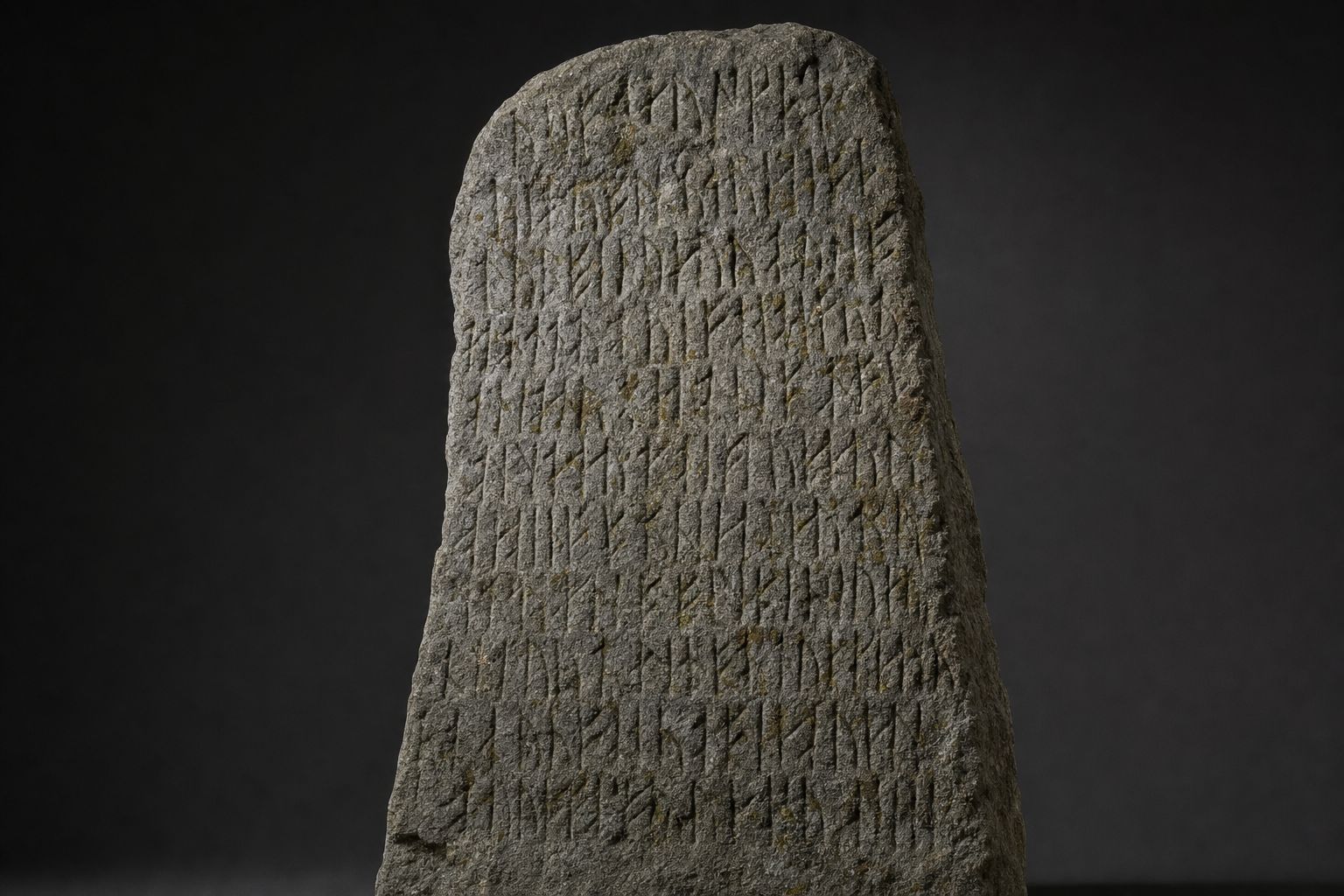
Turkic-speaking confederations on the eastern steppe. The Orkhon inscriptions of the 730s are the earliest substantial texts in a Turkic language, and they warn against exactly the settlement that came next.
Explore this period →A timeline is a blunt instrument. It puts a date on things that took generations, and it draws a line between periods that the people living through them did not notice crossing. Used carefully it still does something no essay can: it shows how long these things actually took, and how much overlap there was between them.
The span covered by this chronology, 600 to 1600, is not an arbitrary bracket. At the start of it, Turkic-speaking peoples appear in the historical record with their own written language, on stone monuments raised in the Orkhon valley. At the end of it, an Ottoman court in Istanbul is producing tile, textile and architecture of a coherence that no later period matched. Between those two points sit the Uighur oases, the Seljuk expansion, the Mongol interruption, and the Timurid workshops. The journey of a thousand years is a real journey, west and south, roughly four thousand kilometres of it.
How to read this timeline
Four things are worth holding onto before the dates begin. Each one is a reason this timeline should be read as a route rather than as a ladder.
First, the periods overlap. The Seljuks of Rum were still ruling in Anatolia while the Ottomans were forming a hundred kilometres away. Timurid painters were at work in Herat while Mehmed II was rebuilding Istanbul. Nothing in this sequence replaces what came before it cleanly.
Second, the geography moves, which is what makes this a journey of a thousand years rather than a dynastic table. It moves but never fully abandons anything. Central Asia does not stop producing when the centre of gravity shifts to Anatolia. Herat in 1450 is more important to the history of painting than anywhere in the Ottoman lands at the same date.
Third, religion changes and the art does not break. The Uighurs were Manichaean, Buddhist and Christian before they were Muslim. Some of the visual habits, the flat colour, the love of pattern, the treatment of the picture plane as a surface to be filled, survive the change of belief intact.
Fourth, almost everything that survives is portable or architectural. Textiles rot, wooden buildings burn, paper is fragile. What is left over-represents ceramic, metal and stone, and under-represents everything that was made of felt, leather and cloth, which for a steppe society was most of it.
600-840: the earliest Turkic peoples
The Turkic peoples enter the record in the sixth century as the name of a confederation ruling the eastern steppe. The Orkhon inscriptions, carved in the 730s in what is now Mongolia, are the earliest substantial texts in a Turkic language, and they are unusually direct: a ruler addressing his people about loyalty, decline and the danger of Chinese luxury goods. The material culture of this period is metalwork, horse gear, belt fittings and weapons, made to be carried.
840-1050: the Uighurs
The Uighurs are the second of the Turkic peoples on this timeline. After the collapse of their steppe empire in 840, a large part of the Uighur population moved south-west to the oases around Turfan, on the northern branch of the Silk Route. What happened there is the first great transformation in this history: a mobile pastoral society became a settled, literate, mercantile one within a few generations. The temples they built were decorated with wall paintings and hung with silk banners, and the surviving fragments show a court style already distinct from its Chinese and Iranian neighbours.
1050-1300: the Seljuks on the chronology
The Seljuks were another Central Asian group, and they moved west rather than staying put. Tughrul Beg took Baghdad in 1055. Within fifty years the dynasty controlled territory from the Oxus to the Mediterranean. They adopted the Iranian bureaucratic apparatus wholesale, endowed madrasas as a matter of state policy, and built in a manner that is instantly recognisable: brick laid in patterns, turquoise glaze used sparingly against it, stone doorways carved to a depth that turns the whole portal into a shadow drawing. The last Great Seljuk sultan died in battle in 1194; the Anatolian branch, the Seljuks of Rum, carried on until the Mongol advance absorbed them.
1300-1500: the Timurids
Timur assembled his empire out of the wreckage the Mongols left, and he assembled his workshops the same way, by moving craftsmen from conquered cities to Samarkand. His successors, notably Shah Rukh and Husayn Bayqara at Herat, turned that into something less brutal and more productive: a court where painting, calligraphy, binding and illumination were organised as connected trades. Timurid manuscript painting is the point at which the tradition becomes deliberately virtuosic, and its influence runs directly into Safavid Iran, Mughal India and the Ottoman court.
1299-1600: the Ottomans
The Ottoman state begins as one of several small Turkish principalities on the Byzantine frontier and ends the period as an empire on three continents. Two dates carry most of the weight. In 1453 Mehmed II took Constantinople, and the city became the centre of an imperial style rather than a provincial one. In the sixteenth century, under Suleyman, the court design office produced the pattern vocabulary, the saz leaf, the rosette, the tulip and carnation, that was then executed in Iznik tile, Bursa silk and Sinan's stone. The consistency of that vocabulary across materials is the defining Ottoman achievement.
The five periods side by side
A table is the honest way to show what changed and what did not, because the continuities are as striking as the breaks.
| Period | Centres | Belief | Dominant media | What is new |
|---|---|---|---|---|
| Early Turks 600-840 | Orkhon valley, the eastern steppe | Tengrist | Metalwork, horse gear, carved stone stelae | A written Turkic language and the first monuments in it |
| Uighurs 840-1050 | Turfan and the Silk Route oases | Manichaean, Buddhist, Christian | Wall painting, silk banners, manuscripts | Settlement, literacy, credit and a script of their own |
| Seljuks 1050-1300 | Isfahan, Baghdad, Konya | Sunni Islam | Brick and stone architecture, inlaid metal, lustre ceramics | The madrasa, the caravanserai and the deeply carved portal |
| Timurids 1300-1500 | Samarkand and Herat | Sunni Islam | Manuscript painting, tile mosaic, jade, astronomy | The court workshop as an institution; the double-shell dome |
| Ottomans 1299-1600 | Bursa, Edirne, Istanbul | Sunni Islam | Iznik tile and vessels, silk, imperial architecture | Central design control across every material at once |
Read across the rows and the direction is clear: from portable to fixed, from mobile to urban, from many beliefs to one, and from an art made where it was used to an art designed in one office and executed everywhere else. Read down the last column and the through-line survives all of it, because every period adds to the surface rather than opening it up.
The dates that actually turn the story
Ten moments carry most of the weight, and it is worth having them in one place.
552 The first Turk confederation is established on the eastern steppe. 732 and 735 The Orkhon inscriptions are carved for Kul Tigin and Bilge Kaghan, the earliest substantial texts in a Turkic language. 744 The Uighur steppe empire replaces its predecessor. 762 The Uighur ruling house adopts Manichaeism, the only state ever to do so. 840 The Kirghiz take the Uighur capital and the population moves south-west to Turfan.
1040 Dandanaqan: the Seljuks defeat the Ghaznavids and become a state rather than a confederation. 1055 Tughrul Beg enters Baghdad and is named sultan. 1071 Manzikert opens Anatolia to Turkish settlement. 1194 The last Great Seljuk sultan dies in battle. 1243 Kose Dag reduces the Anatolian Seljuks to Mongol tributaries.
1370 Timur takes power at Samarkand. 1405 He dies on the road to China and the empire divides. 1420s to 1470s Herat under Shah Rukh and Husayn Bayqara becomes the centre of manuscript production. 1449 Ulugh Beg is murdered; his star catalogue survives him by two centuries.
1326 The Ottomans take Bursa. 1402 Timur defeats Bayezid I at Ankara and the Ottoman state nearly ends. 1453 Mehmed II takes Constantinople. 1517 Selim I takes the Mamluk lands, including Cairo and the holy cities. 1520 to 1566 The reign of Suleyman. 1575 Sinan completes the Selimiye at Edirne, the last building in this account.
What the sources will and will not tell you
Three bodies of writing cover this period and each has a direction of view. Chinese dynastic histories treat the steppe as a frontier problem and record it in terms of tribute, raids and marriage alliances. Arabic and Persian chronicles pick up Turkic peoples first as slave soldiers, then as commanders, then as rulers, and the tone shifts accordingly across two centuries. Byzantine and later Latin writers record arrival, defeat and negotiation.
The Orkhon inscriptions are the exception and worth reading for that reason alone. They are the subject speaking, in the first person, and what they say is not what an outside source would have predicted: a warning against settling, against Chinese silk and gold, and against the loss of a way of life. Within a century the Uighurs had done exactly what the inscriptions warned against, and produced the first great body of Turkic art in the process.
Beyond the objects: carpets, makers and the table
Three strands run alongside this chronology and are treated separately because they cut across it. Carpets and kilims are the one product that Europe imported, painted and preserved better than Turkey did. The named makers are few, and which trades produced them says a lot about how the crafts were ranked. And the table, food, coffee and the vessels they required, is where the objects on this site were actually used.
If you want to see any of it in person, the collections page sets out which museum holds what.
What a journey of a thousand years adds up to
The phrase a journey of a thousand years is not decorative. Turkic peoples begin this timeline on the grasslands of Mongolia and end it on the Adriatic, and the distance is the argument. Read forwards, this is a story of increasing settlement, increasing scale and increasing institutional control over design. Read backwards from an Iznik dish, it is a story about how a set of visual preferences formed on the steppe survived urbanisation, three changes of religion and four thousand kilometres of travel, and was still legible at the end of it.
Common questions
Why does the chronology begin in 600 and end in 1600?
600 is roughly when Turkic-speaking peoples enter the written record under that name, with their own inscriptions following within a century and a half. 1600 marks the end of the sixteenth-century Ottoman court style, after which the visual tradition changes character. The bracket follows the material rather than any political event.
Are the Uighurs, Seljuks, Timurids and Ottomans the same people?
No. They are separate groups, separated by centuries and thousands of kilometres, linked by language family and by a set of inherited visual habits rather than by descent. Treating them as one people is the commonest mistake made with this material.
Where do the Mongols fit in?
The Mongol campaigns of the thirteenth century ended the Great Seljuk state and reshaped Anatolia and Iran. They also moved craftsmen and objects over enormous distances, which is one reason Chinese motifs appear in Islamic ceramics from the fourteenth century onwards. The Timurids built directly on that disruption.
What is the single most useful object for understanding the period?
Arguably a tile panel. It is dated, it is fixed to a building whose function is known, it carries a pattern that was drawn somewhere else and sent to be executed, and it therefore records both a design decision and an administrative one.
Explore the map
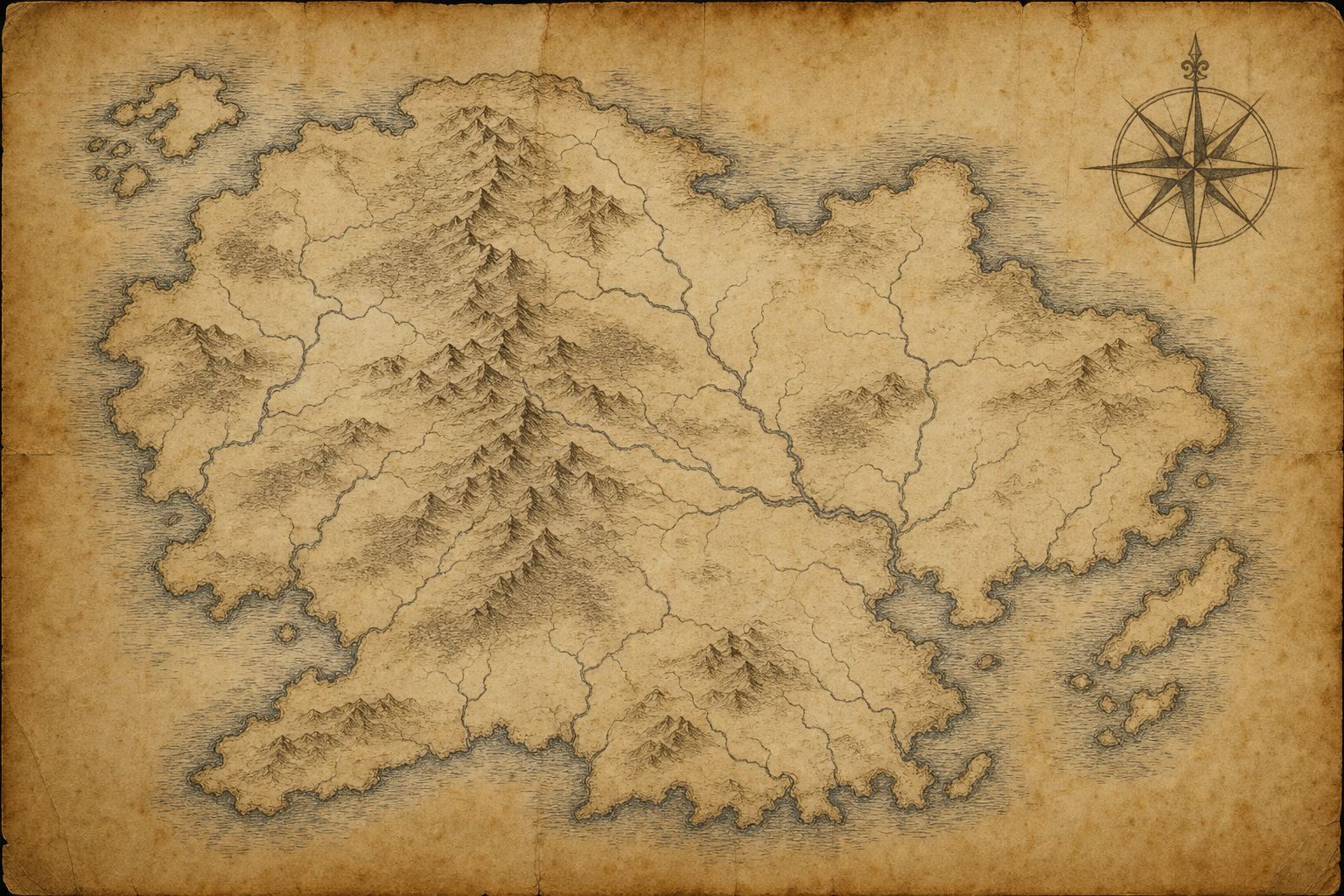
Four thousand kilometres, west and south
The journey is geographical before it is anything else: from the grasslands north of China to the shore of the Adriatic, roughly four thousand kilometres, over a thousand years.