Visiting
Where to See Turkish Art: The Collections in Turkey and Abroad
Almost everything described here can be seen in person, and much of it sits in a surprisingly small number of buildings. This is a practical guide to which collection holds what, in Istanbul, across Anatolia and abroad, including the Anatolian carpets that survive in Transylvanian churches.
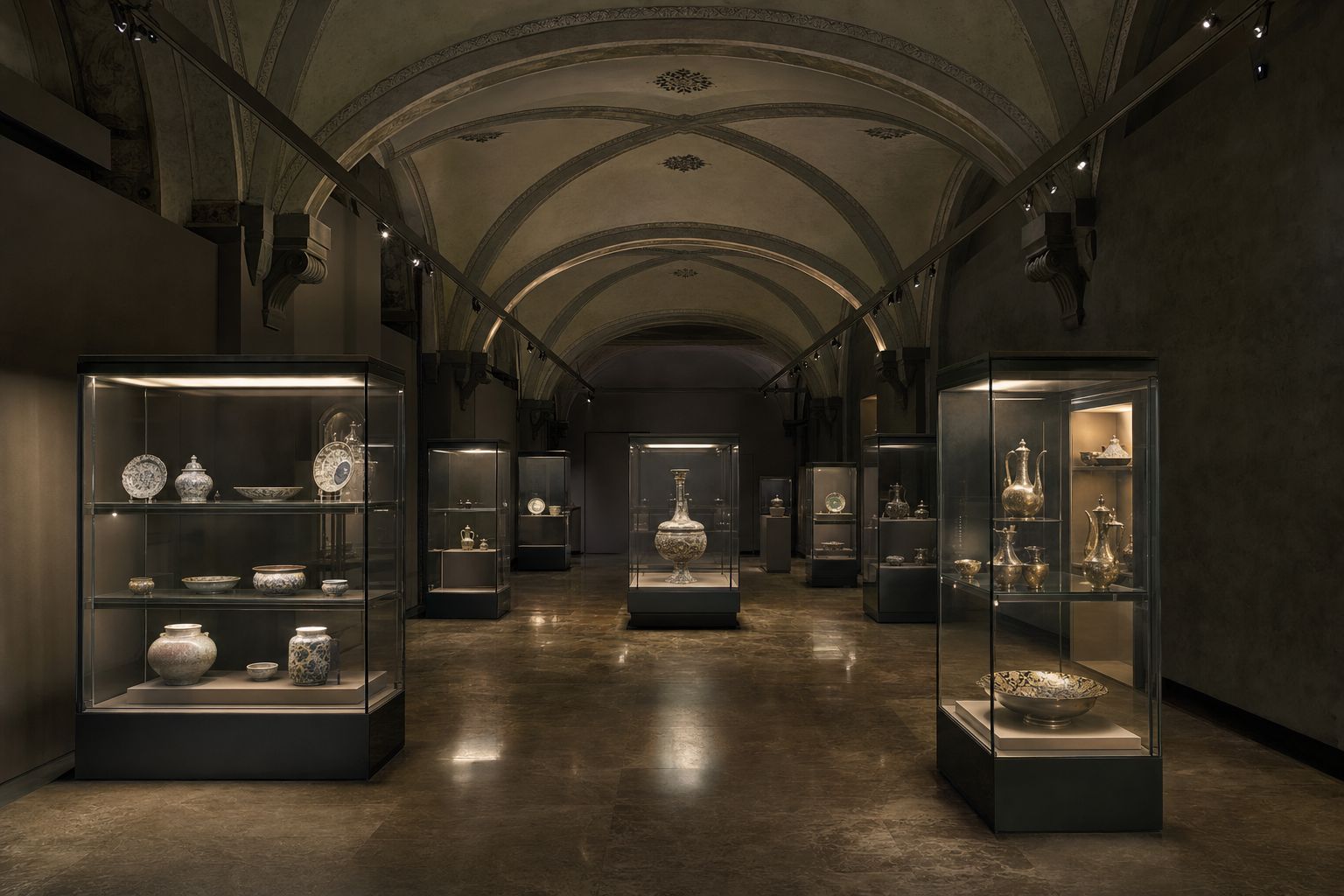
Almost everything described on this site can be seen in person, and a surprising amount of it is concentrated in a small number of buildings. This is a practical guide to which collection holds what, for anyone who wants to test the general claims against the objects.
Istanbul
The Museum of Turkish and Islamic Arts, in the Ibrahim Pasha Palace on the Hippodrome, is the single most important collection for this material. Its carpet holdings are the best anywhere for the Anatolian groups, including Seljuk fragments from Konya, and it covers manuscripts, metalwork, woodwork and ethnography across the whole span.
Topkapi Palace holds the imperial collections: the treasury, the arms and armour, the porcelain, the manuscript library and the relics. It is a collection assembled by the court rather than by curators, which makes it different in kind from a museum. The Istanbul Archaeology Museums next door hold the tiled kiosk, itself a fifteenth-century building with Timurid-influenced tilework.
Anatolia
| Place | City | Strength |
|---|---|---|
| Mevlana Museum | Konya | Seljuk woodwork, carpets, manuscripts and the tomb complex itself |
| Ince Minareli Medrese | Konya | Seljuk stone and stucco carving, in a building that is itself the exhibit |
| Karatay Medrese | Konya | Seljuk tile, including the famous star-tile dome |
| Green Mosque and Tomb | Bursa | Early Ottoman tilework of the 1420s, before the Iznik palette |
| Iznik Museum | Iznik | Kiln sites and the local ceramic sequence, in the town itself |
| Divrigi Great Mosque | Sivas province | The most extravagant Seljuk stone carving anywhere |
| Selimiye Mosque | Edirne | Sinan's last and, by his own account, best building |
Outside Turkey
The dispersal of this material is a fact of its history and it means several of the strongest holdings are in Europe and North America. The Victoria and Albert Museum and the British Museum in London, the Louvre in Paris, the Museum fur Islamische Kunst in Berlin, the Metropolitan Museum of Art in New York and the Freer and Sackler in Washington all hold substantial Ottoman, Seljuk and Timurid collections.
For the Central Asian end of the story, the Museum fur Asiatische Kunst in Berlin holds the Turfan wall paintings and banners recovered in the early twentieth century, and the State Hermitage in Saint Petersburg holds important Central Asian material. For Timurid architecture there is no substitute for Samarkand and Herat themselves.
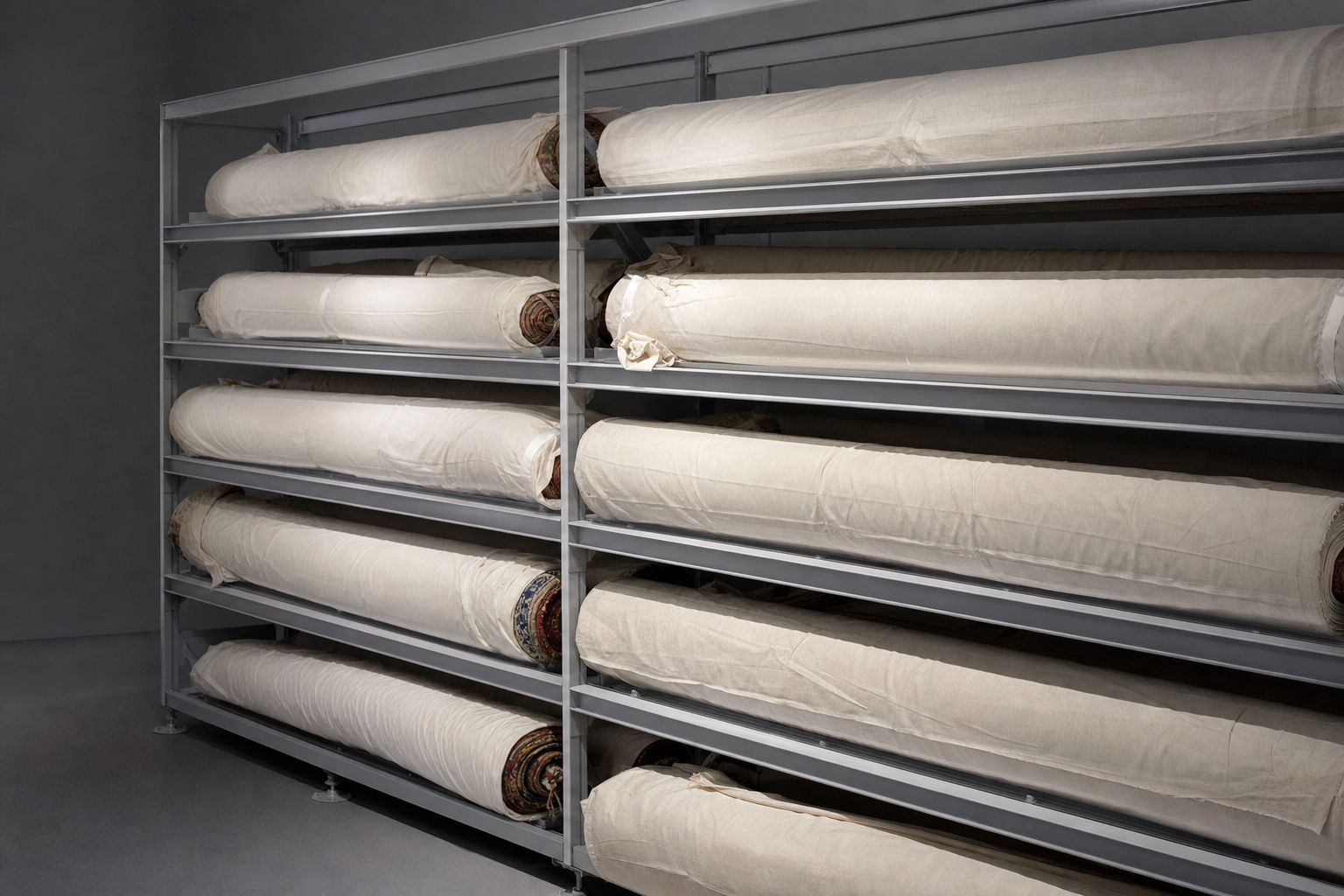
Saved by being hung
Anatolian carpets given to Lutheran churches in Transylvania were hung on walls rather than walked on. Nothing comparable survives in Turkey, because carpets in Turkey were used.
The Transylvanian churches
An unusual case worth knowing about. Several hundred Anatolian carpets of the sixteenth and seventeenth centuries hang in Lutheran churches in Transylvania, in what is now Romania, where they were given by Saxon merchants and simply left. Brasov's Black Church holds the largest single group. Nothing comparable survives in Turkey, because carpets in Turkey were used.
How to look at an object
Three questions get most of the way, and they work in any vitrine. What is it made of, and what does that material make possible or impossible? Who was it made for, and how can you tell from the object rather than the label? And what has changed since: silver inlay blackens or drops out, bronze corrodes green, glaze crazes, gold wears through, dyes fade unevenly.
The third question is the one museums answer least often and it changes what you see. Almost nothing in this account looks the way it did when it left the workshop.
Common questions
Which single collection is the most important for this period?
The Museum of Turkish and Islamic Arts in Istanbul, particularly for carpets, where its Seljuk and Anatolian holdings have no equal.
Where can Seljuk architecture be seen?
Chiefly in central and eastern Anatolia: Konya, Sivas, Divrigi, Erzurum and Kayseri, and along the caravanserai routes between them. Great Seljuk work survives in Iran, notably at the Friday Mosque of Isfahan.
Why are so many Turkish carpets in Romania?
They were bought by Saxon merchants and given to Lutheran churches in Transylvania, where they were hung on walls rather than walked on. Several hundred survive there in exceptional condition.
Where is the Turfan material?
Largely in Berlin, at the Museum fur Asiatische Kunst, following the German expeditions of the early twentieth century, with further holdings in other European and Asian collections.