Peoples and dynasties
Peoples and Dynasties: The Uighurs, Seljuks, Timurids and Ottomans in Order
Four stages of one history, each of which made the next one possible. They are not one people and they did not think of themselves as one; what they share is a language family, an origin in the steppe economy of Inner Asia, and a set of decisions about surface and geometry that survive everything else.
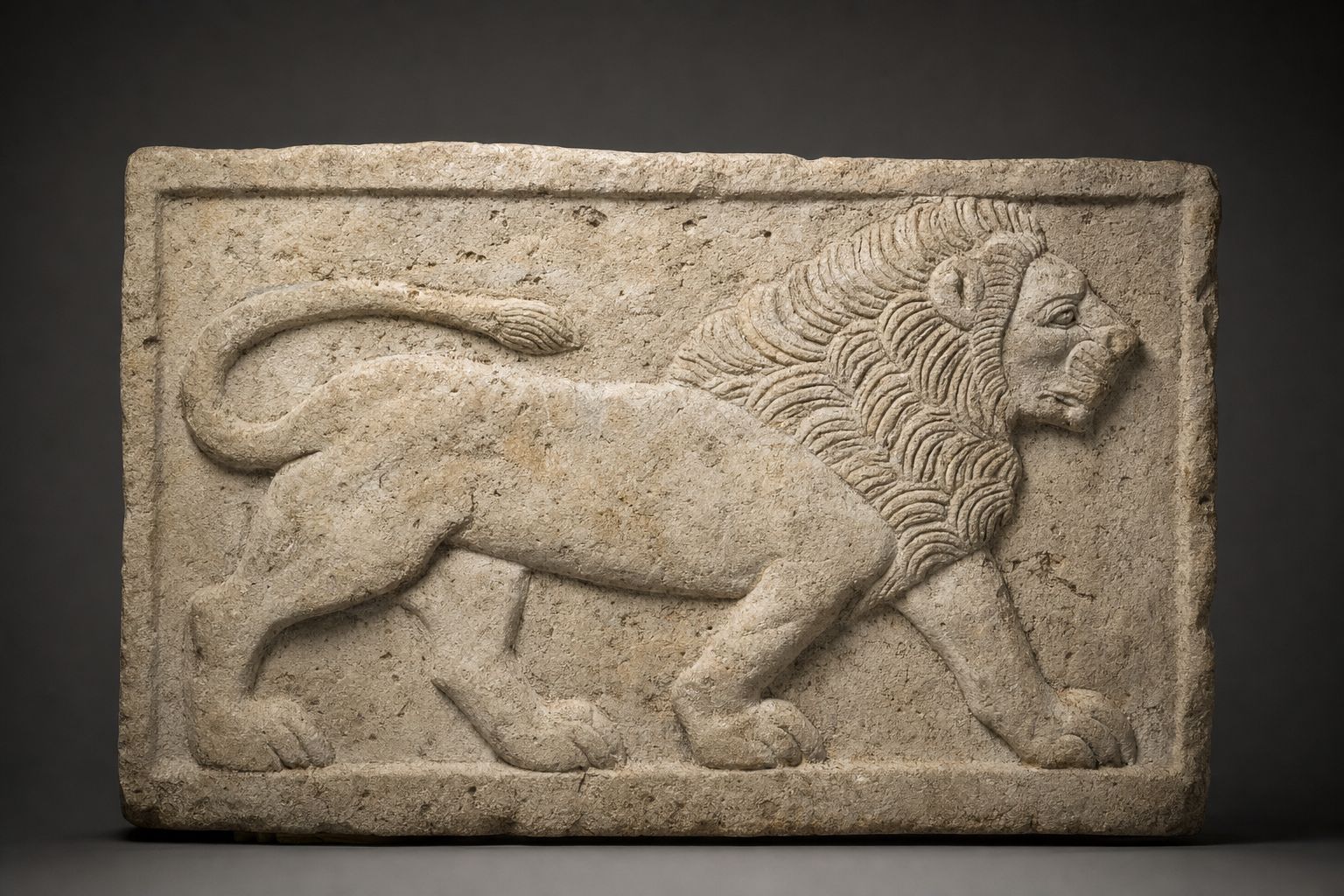
The journey
Civilizations that built, ruled and inspired
Four turns of the same history, in order. The line runs down the page because that is how the inheritance runs: each stage takes something from the one before it and changes it.
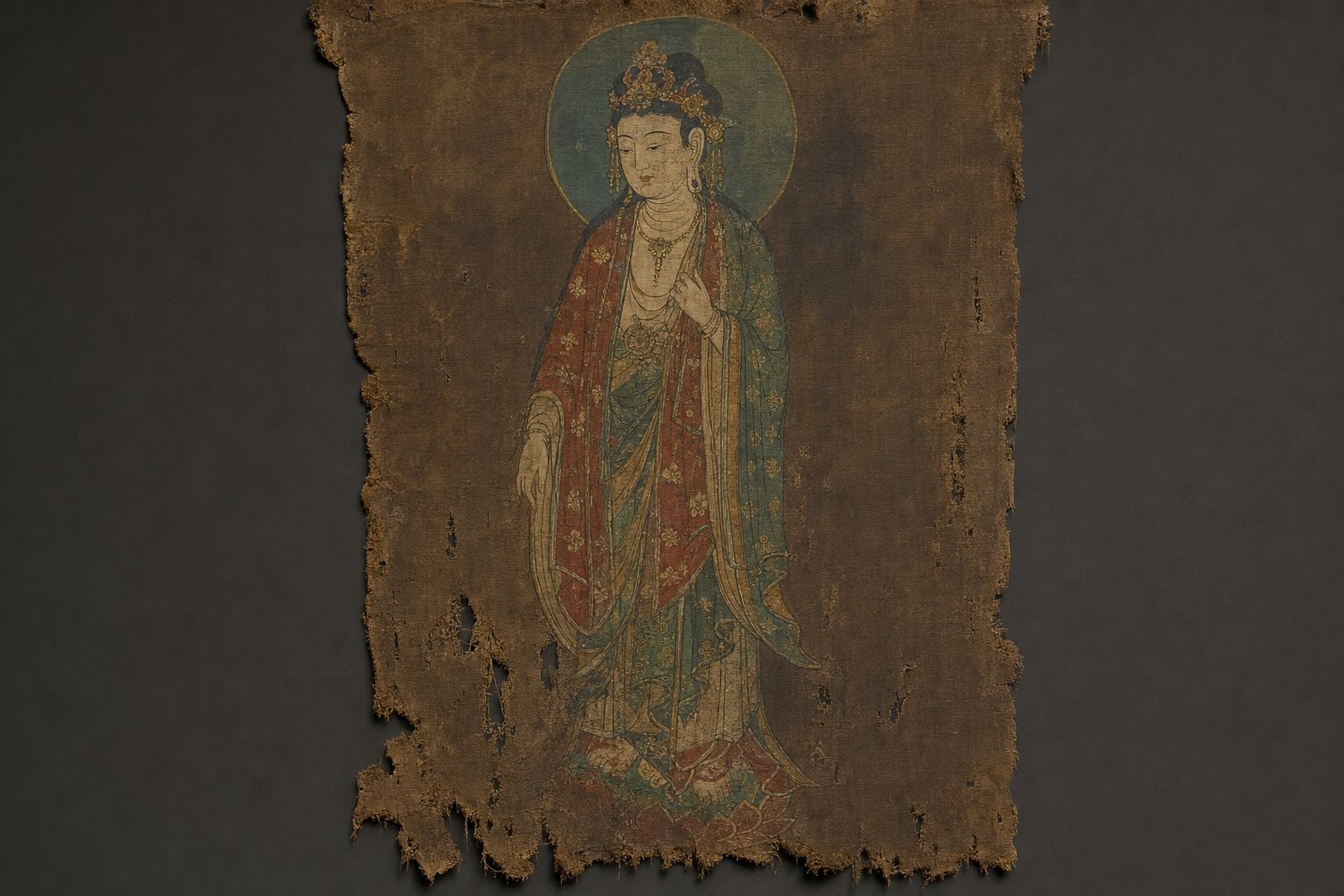
The Uighurs
Masters of the Silk Route oases. They left the steppe for walled towns, kept contracts in their own script, and supported three religions in the same street.
Explore this era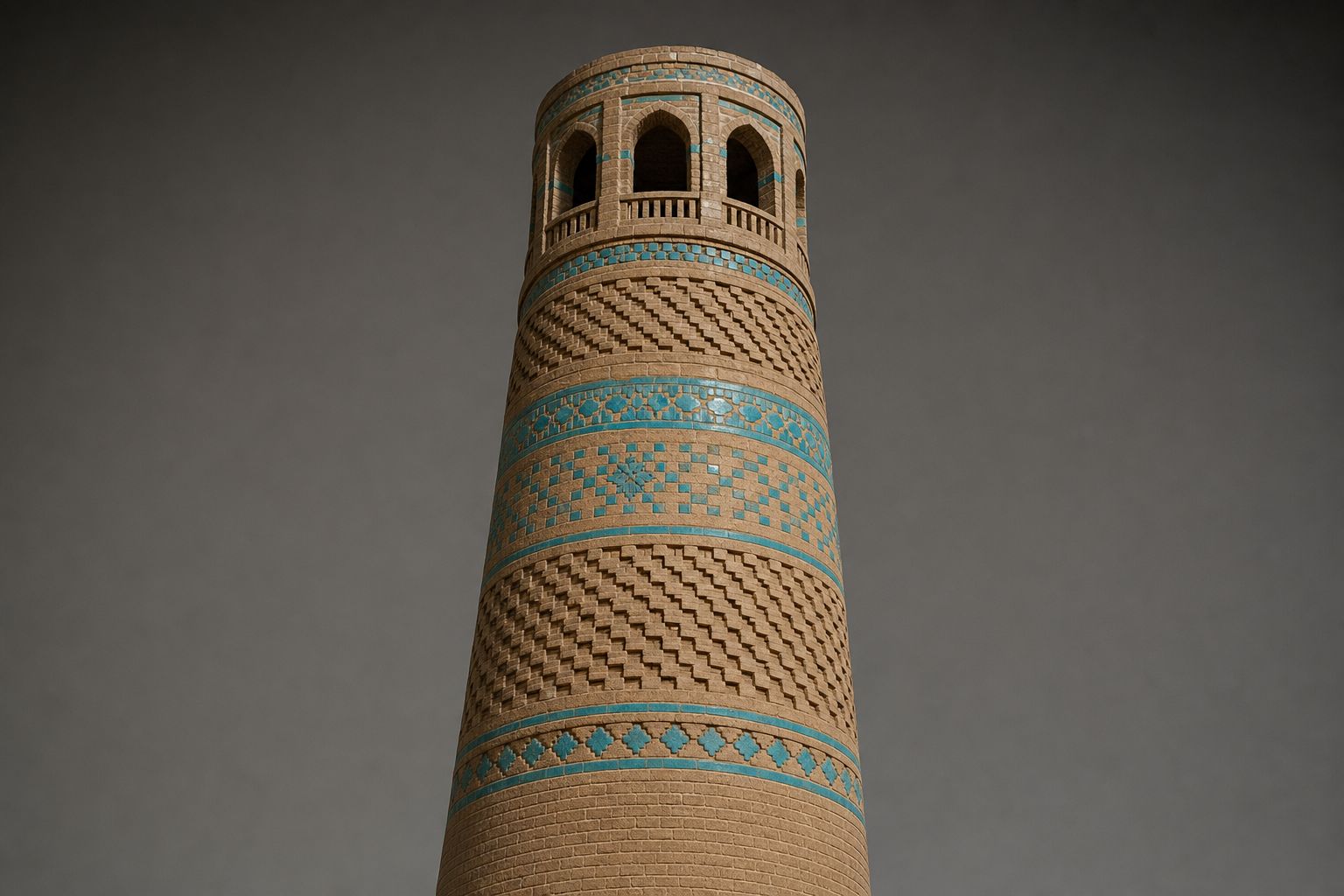
The Seljuks
Builders, patrons and conquerors. The first Turkic dynasty to rule from Central Asia to the Mediterranean, and the one that opened Anatolia.
Explore this era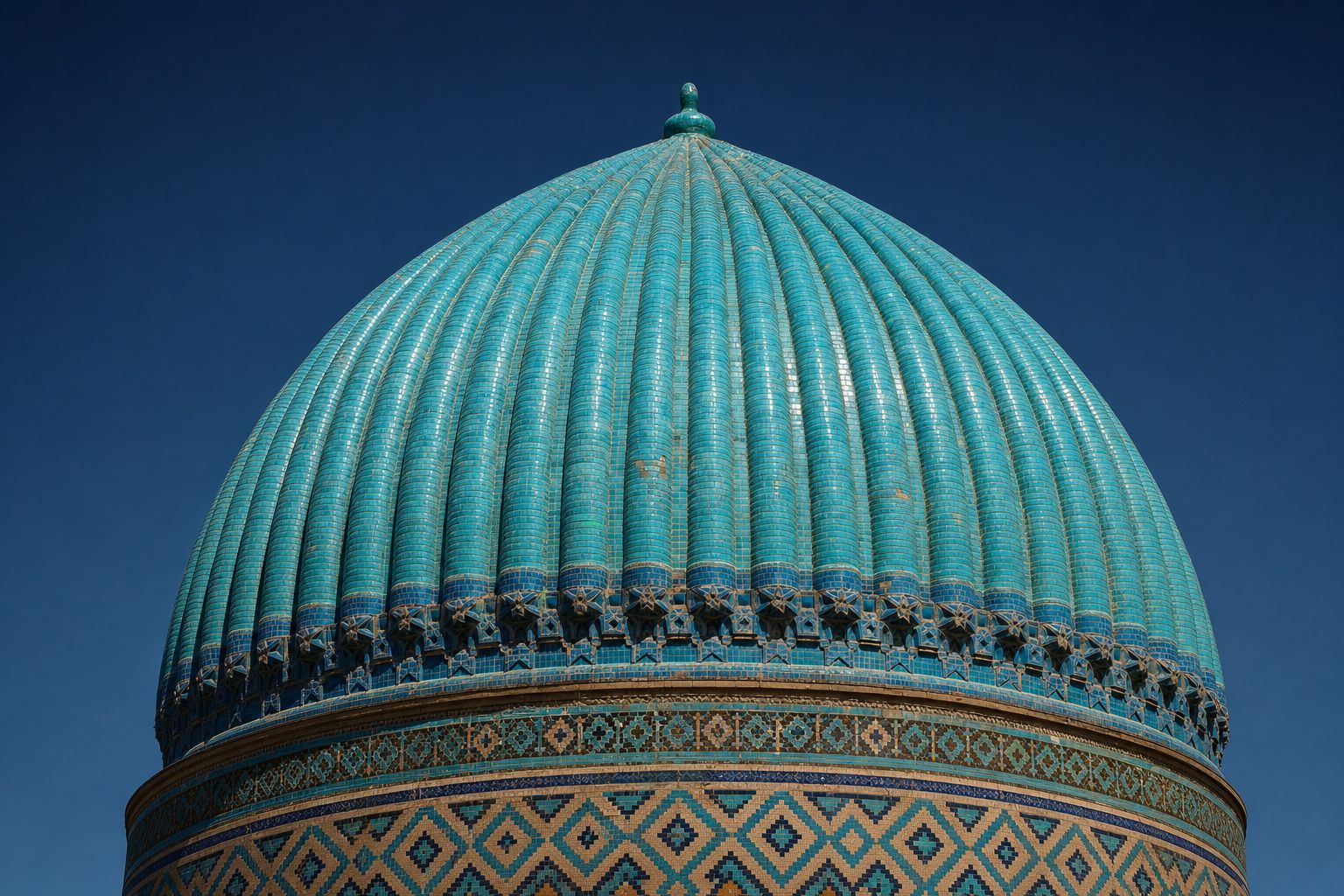
The Timurids
Court workshops at Samarkand and Herat, where painting, calligraphy and binding were organised as connected trades for the first time.
Explore this era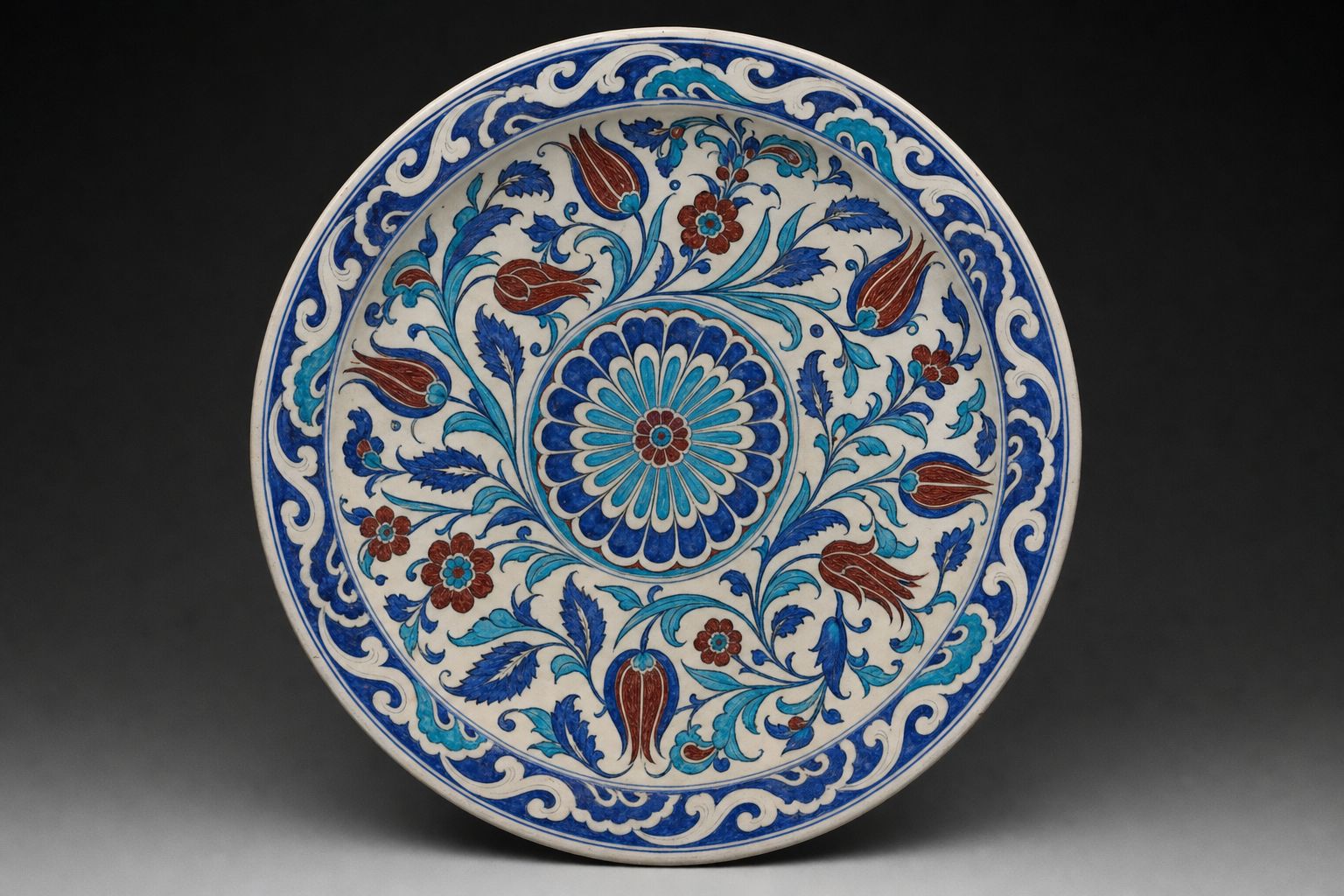
The Ottomans
From frontier principality to world empire, with a design office that gave tile, silk and stone one vocabulary.
Explore this eraThe habit of grouping these four together is a modern one, and it is worth being clear about what justifies it. Not a shared state, and not a shared faith for most of the period. What they share is a language family, a common origin in the steppe economy of Inner Asia, and a set of decisions about surface, pattern and geometry that survive every other change.
Four peoples, in order, each one inheriting from the last and changing it. This section takes them one at a time. Read in sequence they make an argument; read separately they are four distinct art histories that happen to share a language family.
The Uighurs, 840 to 1050
The transition from steppe to settlement. Oasis towns on the Silk Route, three religions in the same street, and the earliest large surviving body of Turkic painting. Read about the Uighurs.
The Seljuks, 1050 to 1300
West to Baghdad and then to the Mediterranean. Madrasas as state policy, caravanserais on every road, and an architecture of brick, turquoise glaze and deeply carved stone. Read about the Seljuk Turks.
The Timurids, 1300 to 1500
Court workshops at Samarkand and Herat, manuscript painting at its most virtuosic, and a style that outlived the dynasty in three later empires. Read about Timurid art.
The Ottomans, 1299 to 1600
A frontier principality becomes an empire, and a central design office gives it one visual language across tile, silk and stone. Read about the Ottoman Empire.
What links them, and what does not
They share a language family and a set of visual habits. They do not share a state, a religion for most of the period, a territory or a sense of common identity. Any account that treats the four as chapters of one national story has to ignore the fact that they were separated by centuries and, in several cases, by open war.
Before all of them
The steppe inheritance that the four share, and what the word Turk was doing before any of these states existed. Read the introduction.
One figure in detail
Mehmed II is the only ruler in this thousand years whose face is as well known as anything he built, which is itself a historical fact worth explaining. Read about Mehmed II.
What they have in common
Three habits recur across all four, in different materials and under different religions. The first is horror of the empty plane: a surface is something to be covered edge to edge, and a border is treated as another field for pattern rather than as a frame. The second is a preference for geometry that can be constructed, that is, patterns generated from a circle and a straightedge rather than drawn freehand. The third is the flattening of the figure into the surrounding design, so that a hunter on a bronze mirror and a courtier on a Herat page are both part of the pattern before they are individuals.
None of these is unique to Turkic art. What is distinctive is how long the combination persists and how far it travels. A Konya doorway of 1250 and an Istanbul tile panel of 1560 are doing the same three things, three centuries and a thousand kilometres apart.
Why the order matters
The objects make this easier to see than the chronicles do. Put a thirteenth-century inlaid brass bowl next to a fifteenth-century Herat page and next to a sixteenth-century Iznik dish, and the continuities are obvious in a way that no amount of dynastic history conveys: the same instinct to fill the field, the same construction of pattern from a divided circle, the same reluctance to let a figure sit in front of a background rather than inside one.
It is tempting to treat these four as parallel cases of the same thing. They are not. The Uighur move into settlement is what makes literate Turkic administration possible; Seljuk expansion is what makes Anatolia Turkish; Timurid workshop practice is what the Ottoman design office later formalises. Each stage removes an obstacle for the next one. Taken out of sequence, most of the interesting connections disappear and what remains is a list of styles.
Common questions
In what order should these pages be read?
Chronologically: Uighurs, Seljuks, Timurids, Ottomans. Each stage removes an obstacle for the next one, and out of sequence most of the connections disappear.
Were these four peoples related to each other?
By language family and cultural inheritance rather than by direct descent. They did not regard themselves as one people and in several cases fought each other.
Which of them produced the most surviving material?
The Ottomans, by a wide margin, which is partly a fact about production and partly a fact about how recently it was made. Survival rates rise sharply towards the end of the period.
Where do the Mongols fit?
The thirteenth-century campaigns ended the Great Seljuk state, reshaped Anatolia and Iran, and moved craftsmen and objects across enormous distances. The Timurids built directly on that disruption.