Turkish Art,
History and Culture
from 600 to 1600
A thousand years of Turkish art, from the Turkic peoples of Inner Asia to the grandeur of the Ottoman Mediterranean: artistic achievement, cultural exchange and enduring legacy, gathered in one place.
Explore the timeline →- 600-1600a thousand years
- Four peoplesUighur to Ottoman
- Six objectsexamined in detail
The through-line
A thousand years of Turkish art and culture, in one continuous line
Turkish art covers more ground than the phrase looks like it should. Between 600 and 1600 the peoples who spoke Turkic languages moved from the grasslands north of China to the shore of the Adriatic, and in the course of that movement they governed at least a dozen states, adopted three major religions and produced an art that is recognisable across the whole distance without ever being the same twice.
Turkish art is the shorthand this site uses for that whole span, and it is worth saying at the outset that the shorthand is imprecise. That is the difficulty with the subject and also the reason it repays attention. A carved wooden door in Konya and a painted page from Herat and a tiled wall in Istanbul do not obviously belong together. Put them in order and the connections start to show: a shared preference for surface pattern over depth, a habit of covering a whole plane rather than framing a scene, an interest in geometry that is closer to mathematics than to decoration.
This site follows that line in the order it happened. The chronology gives the shape of it. The sections on peoples and dynasties take each turn in detail, from the Uighur oases through the Seljuk expansion and the Timurid workshops to the Ottoman court. The objects are where the argument is actually made, because an object is harder to generalise about than a period.
- 600-1600the span this archive covers
- Fourpeoples, each inheriting from the last
- Sixobjects examined in detail
Explore the collection
Four ways into a thousand years of Turkish art
The material runs from painted plaster in the Turfan oases to tiled walls on the Bosphorus. These are the four routes through it.
Peoples and Dynasties
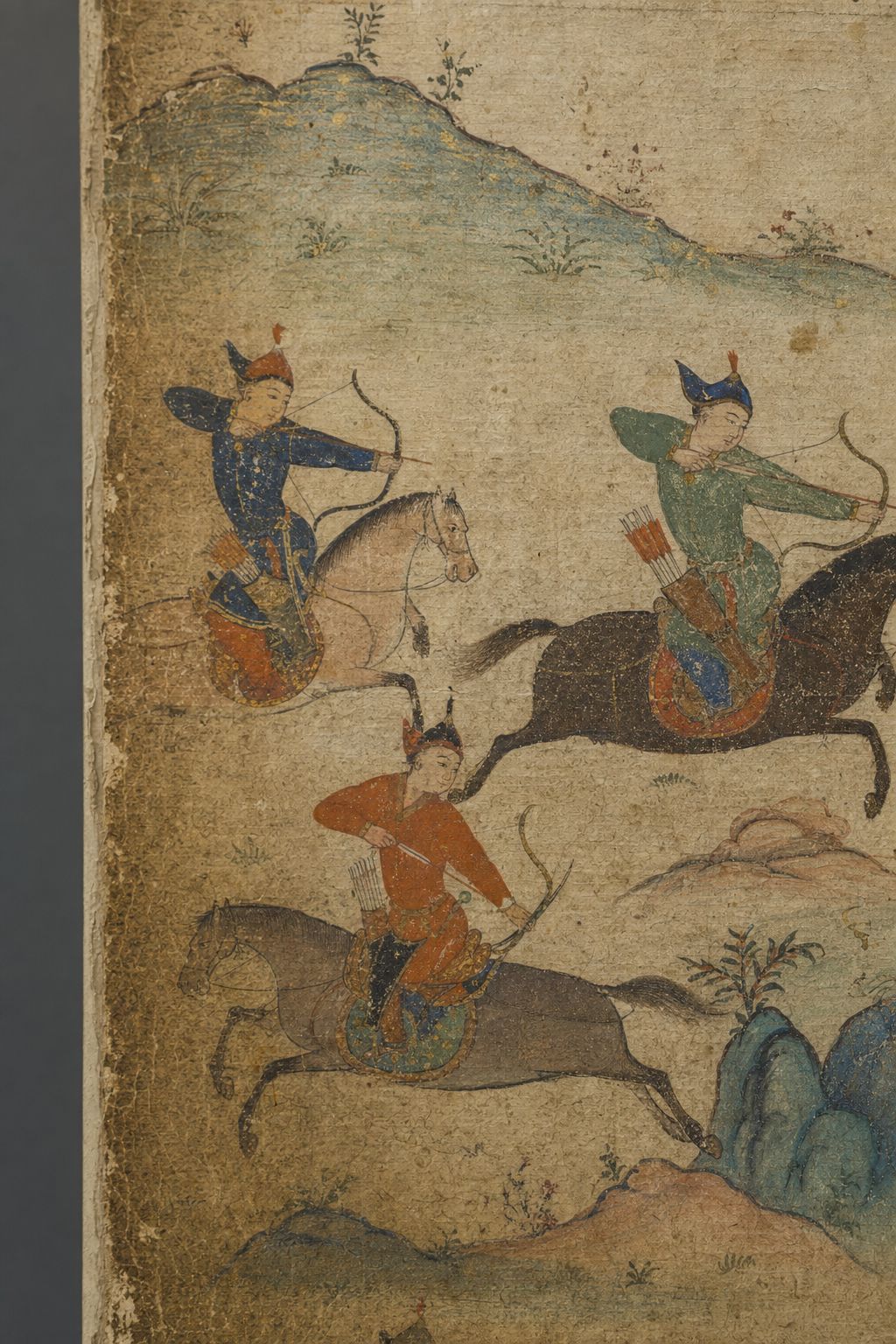
The peoples, rulers and dynasties that carried one culture across half a continent.
Explore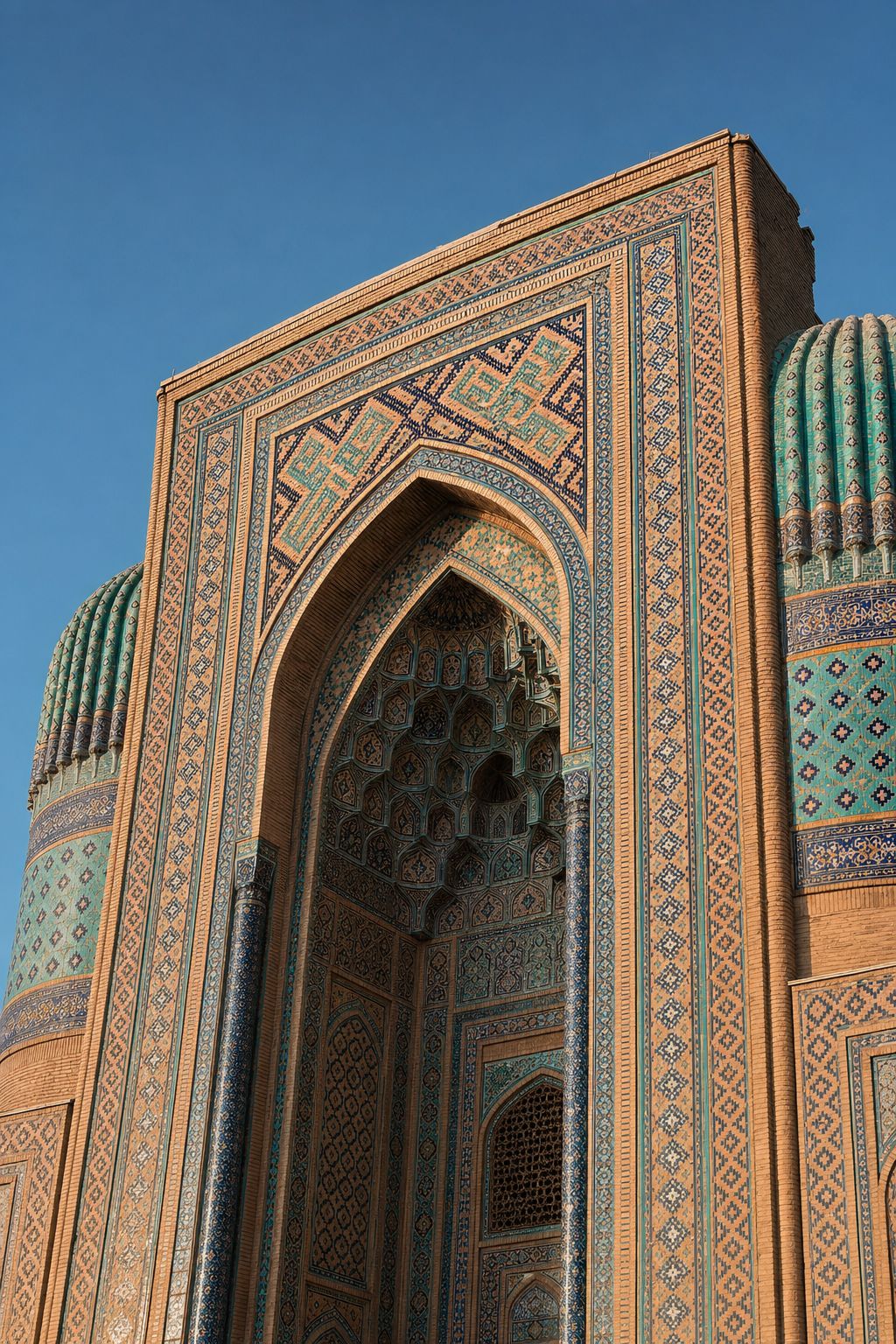
Architecture
From madrasa courtyards to imperial mosques, the building tradition of a golden age.
Explore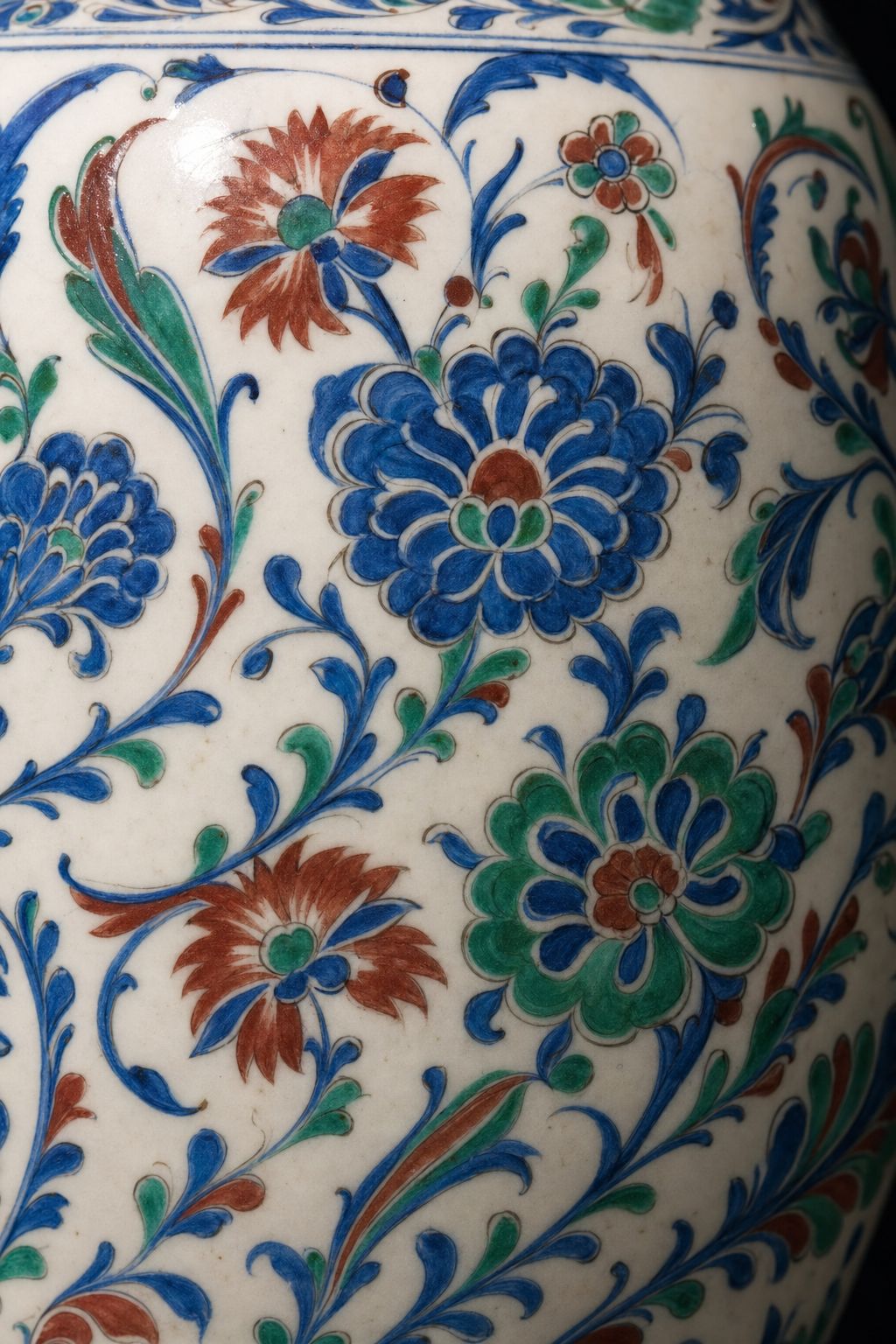
Masterpieces
Objects that outlived the courts that made them, and what they still record.
Explore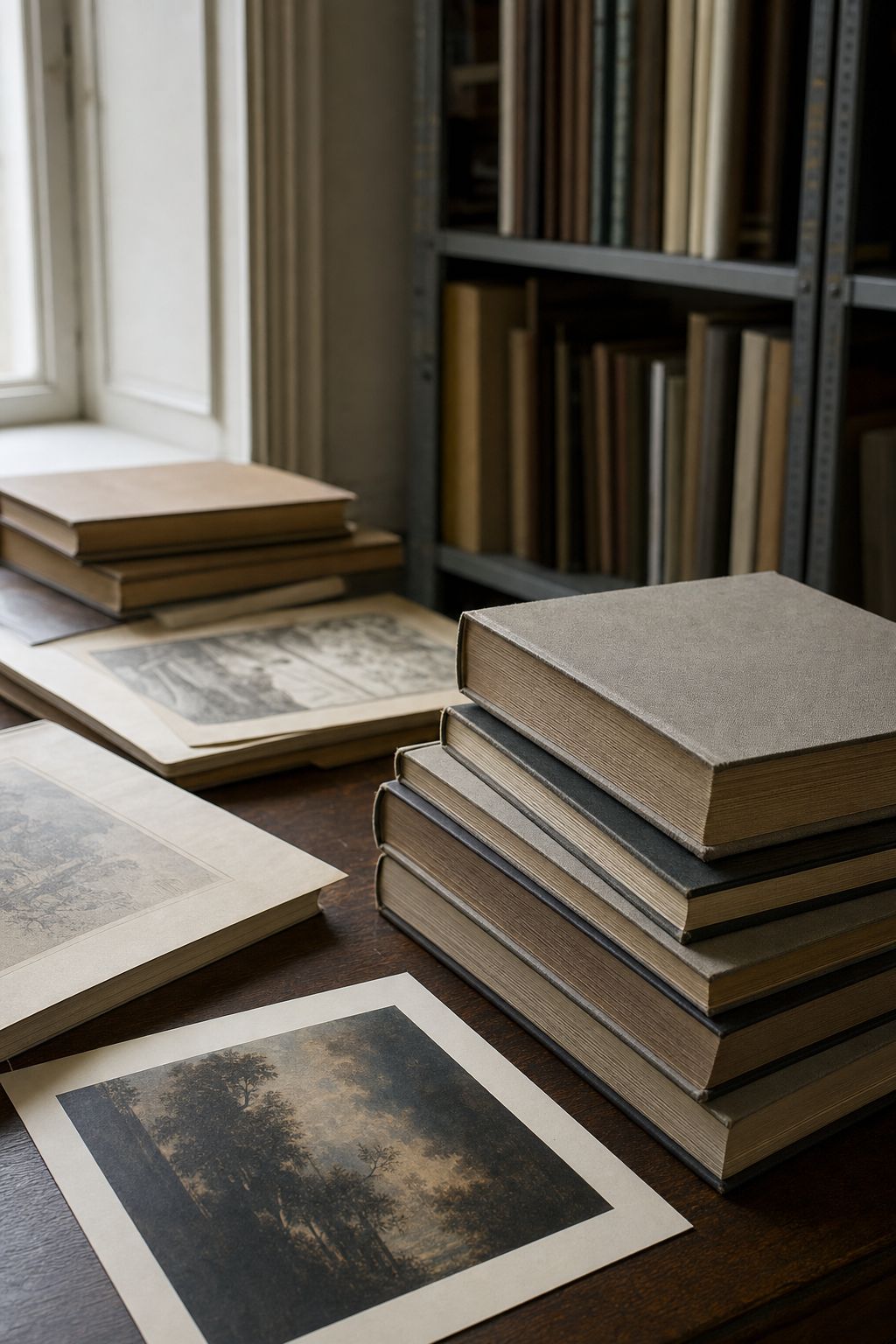
The Exhibition, 2005
The London exhibition this archive was built around, and what it brought together.
ExplorePeoples and dynasties
One history, four turns: the peoples behind the objects
Each of these groups inherited something from the one before it and changed it. Read in order, the objects stop looking like a style and start looking like an argument being continued.
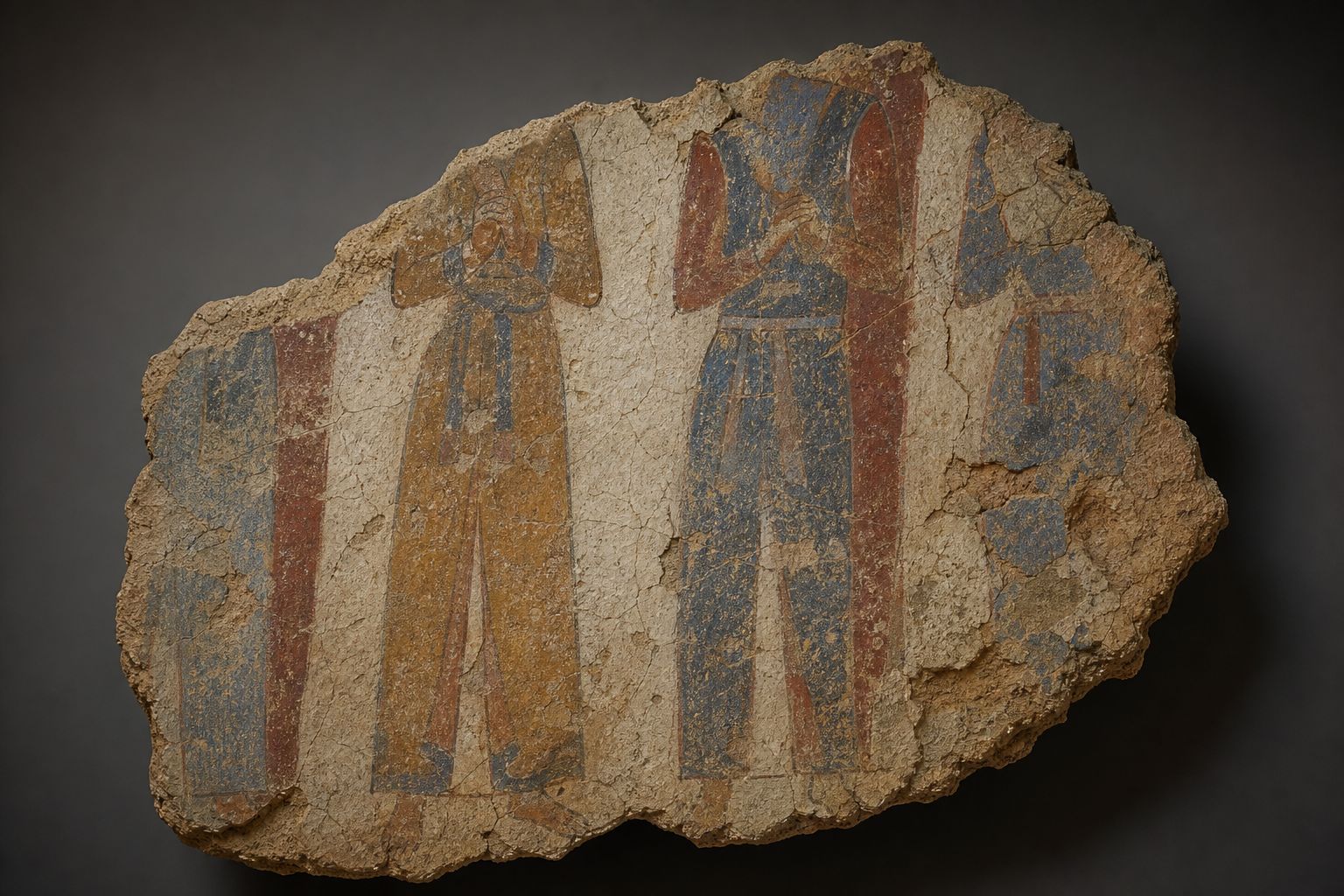
The Uighurs
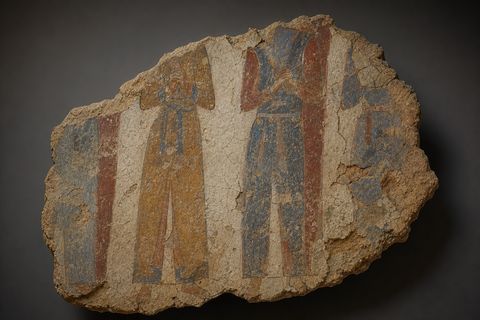
840-1050At Turfan, on the northern arm of the Silk Route, Turkic-speaking Uighurs left the steppe for walled oasis towns. They farmed, lent money at recorded rates of interest, kept contracts in their own vertical script and supported Manichaean, Buddhist and Christian communities in the same street. The wall paintings and silk banners recovered from the region are the earliest large body of Turkic art anywhere, and the dry climate preserved paper, wood and painted plaster in quantities found nowhere else in Central Asia. The script itself outlasted the state that made it: the Mongols borrowed it, the Manchus borrowed it from them, and it was still in official use in Beijing in the nineteenth century.
Read the full account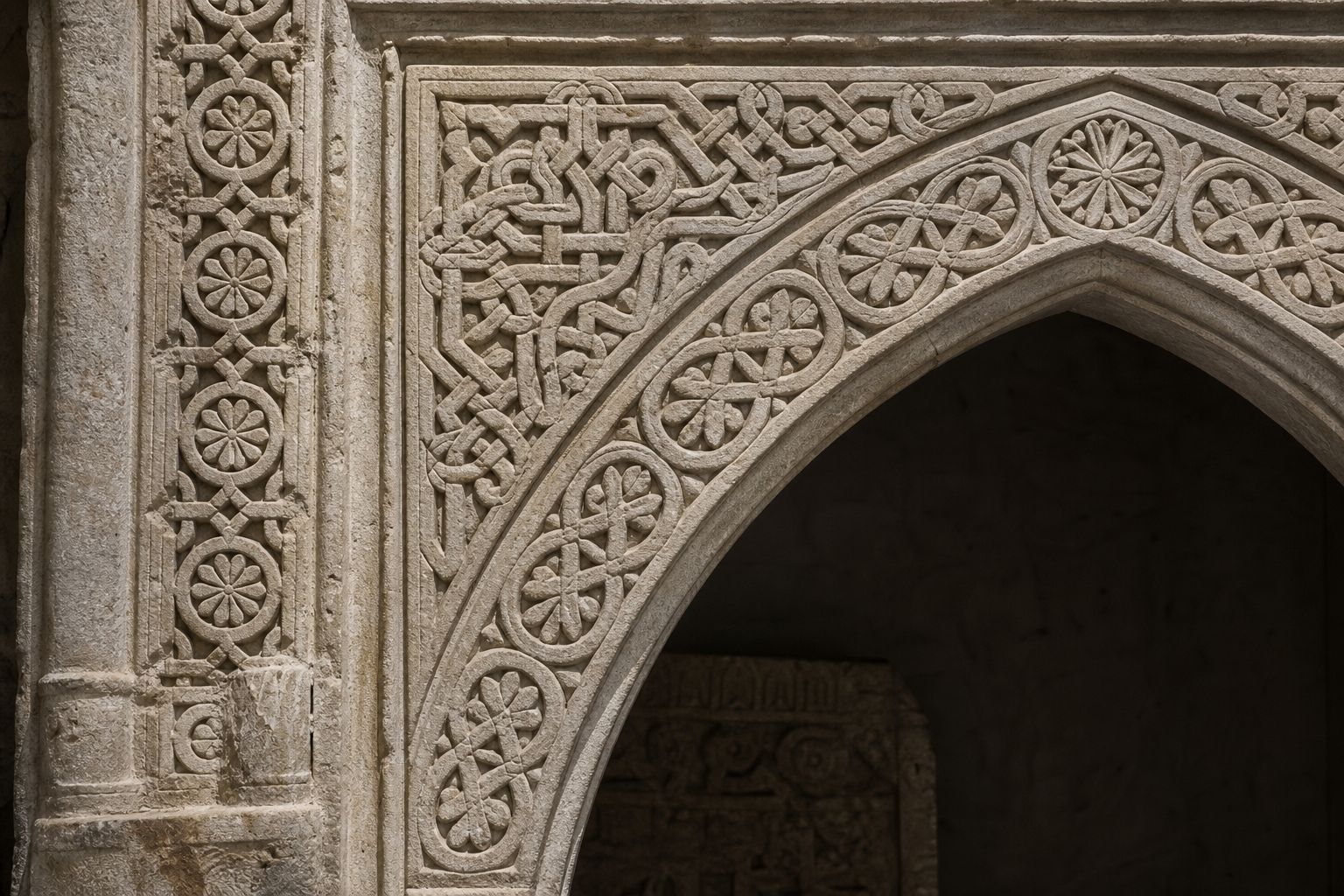
The Seljuks
1050-1300The Seljuks moved west in the eleventh century and became the first Turkic dynasty to rule from Central Asia to the eastern Mediterranean. Tughrul Beg entered Baghdad in 1055 and took the title sultan from a caliph who kept religious authority and surrendered the rest. They ran the state on Iranian lines, endowed madrasas as policy, and built a chain of caravanserais roughly a day apart that lodged any traveller free for three days. The architecture is brick, turquoise glaze and stone carved deep enough to read as shadow. Some of the best of it in Anatolia postdates the Mongol defeat of 1243, which is the clearest warning against reading political decline and artistic decline as one curve.
Read the full accountThe Timurids
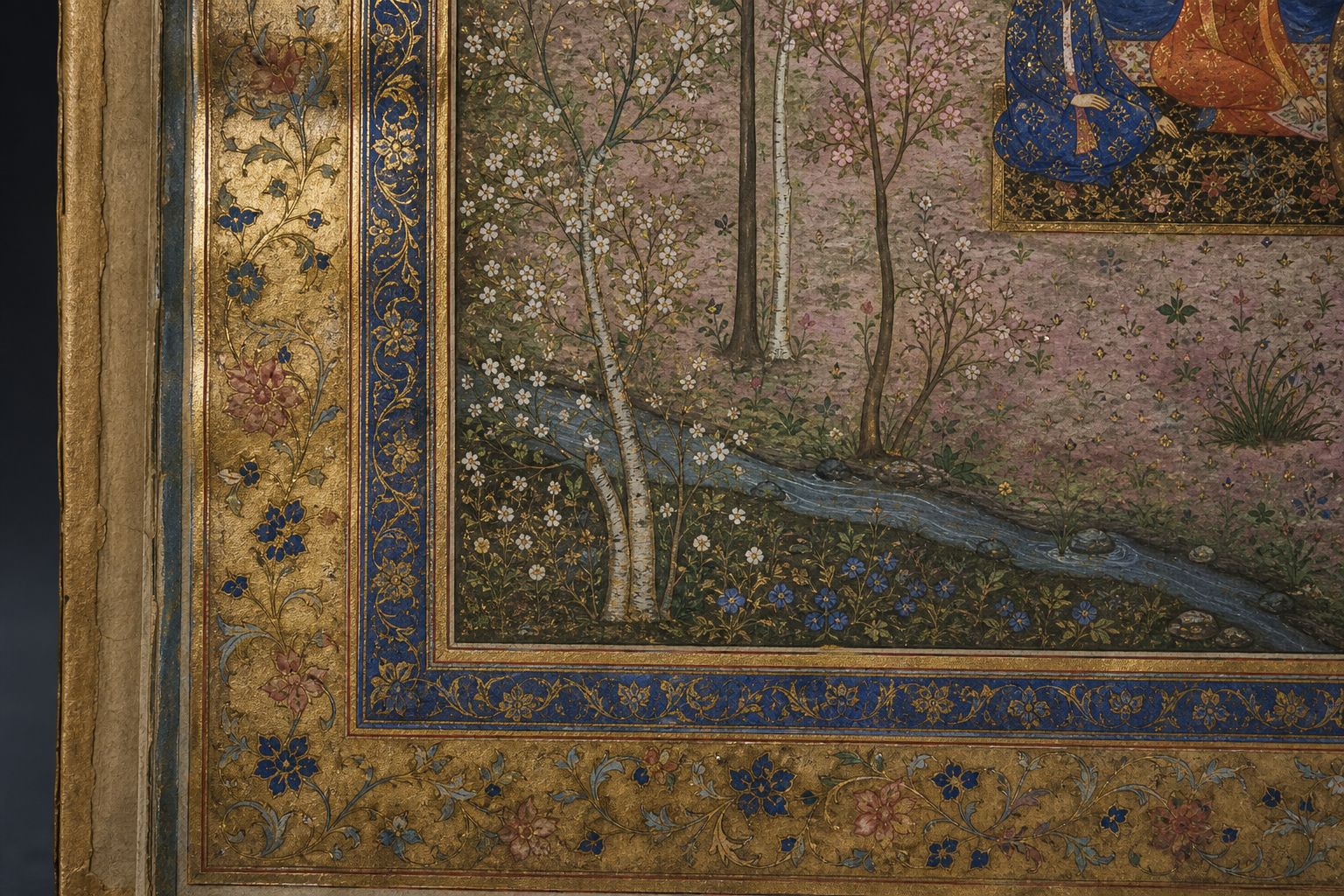
1300-1500Timur and his successors ran their courts at Samarkand and Herat like workshops. Craftsmen were moved, mostly by force, from Damascus, Baghdad, Delhi and Shiraz to wherever the court happened to be, and the concentration of skill that produced Timurid art was in the first instance a concentration of captives. What his successors did with it was different. The kitabkhana at Herat was library, design studio and workshop at once, and a single illustrated volume passed through six trades before it was bound. The lapis came from Badakhshan. The standard those workshops set held from Anatolia to India for two hundred years, and Babur carried it to Agra himself.
Read the full account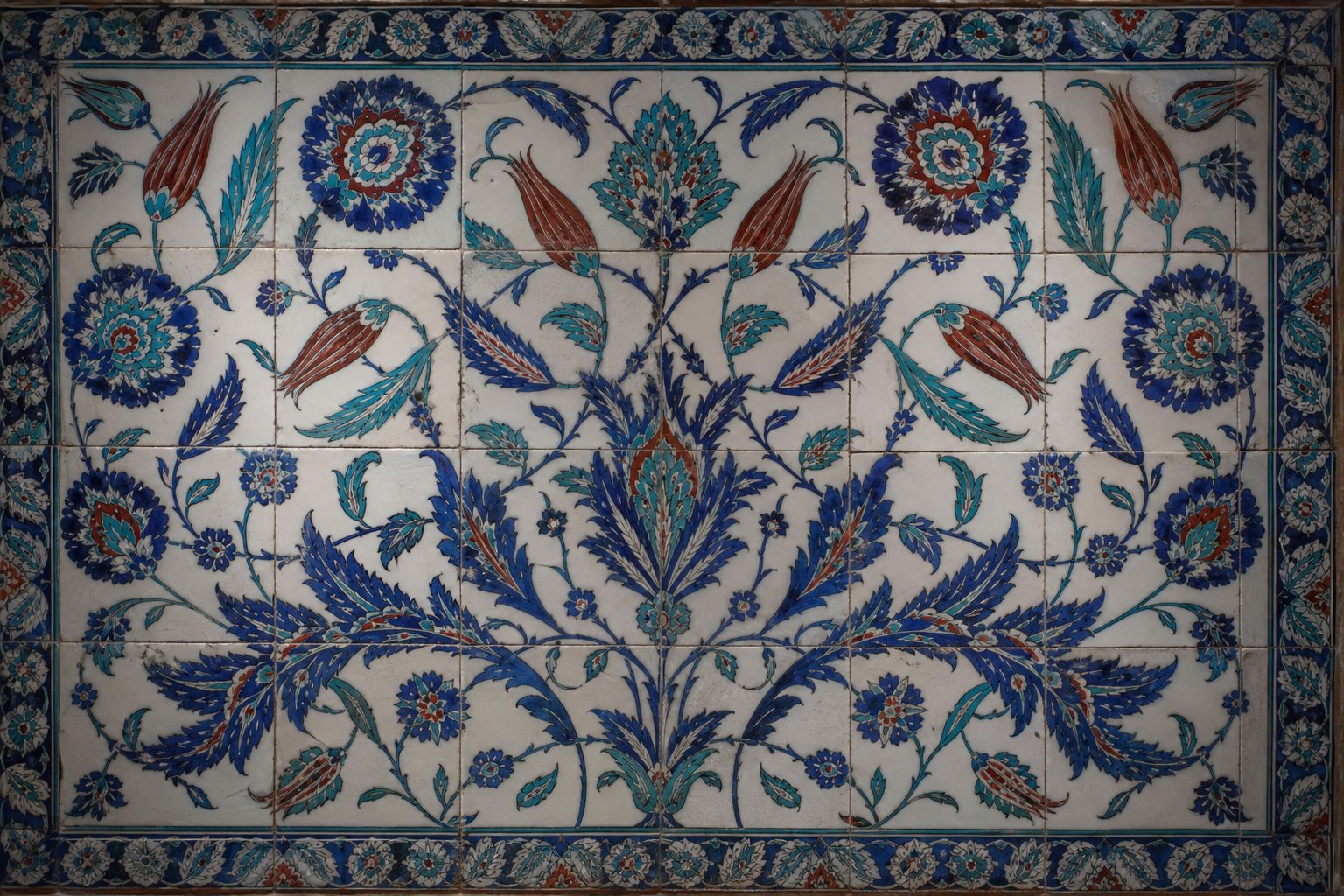
The Ottomans
1299-1600A frontier principality in north-western Anatolia grew into an empire across three continents. Its court design office, the nakkashane, employed designers who drew patterns on paper, and those drawings were sent out to the tile kilns at Iznik, the silk looms at Bursa and the imperial architects. That is why an Ottoman dish and an Ottoman mosque wall can carry the same saz leaf: not because a potter copied a building, but because both worked from the same sheet. The palette is datable in steps, which makes Iznik the backbone of the period''s chronology, and the sealing-wax red that arrives around 1557 is the one colour no rival workshop ever managed to fire.
Read the full accountMasterpieces
Objects that survived the centuries, and the stories that survived with them
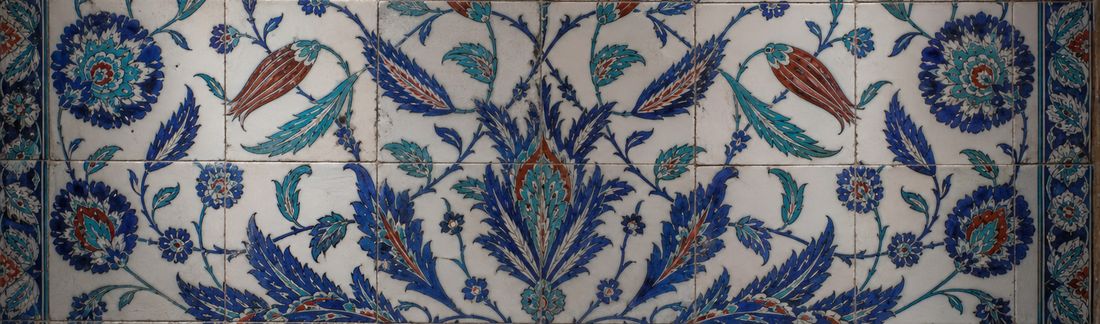
Six pieces in six materials: ceramic, steel, brass, bronze, silk and paper. Each one carries a technique, a trade route and a customer, and almost none of them looks the way it did when it left the workshop.
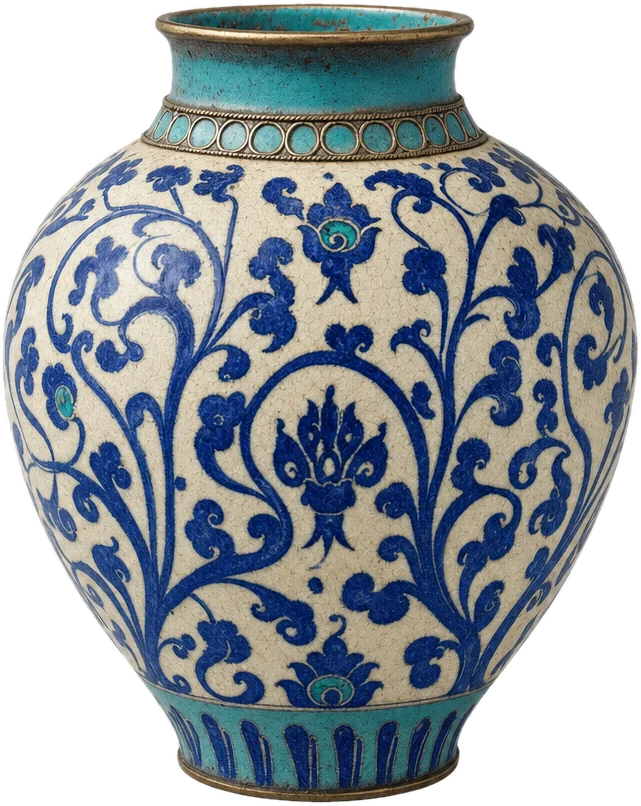
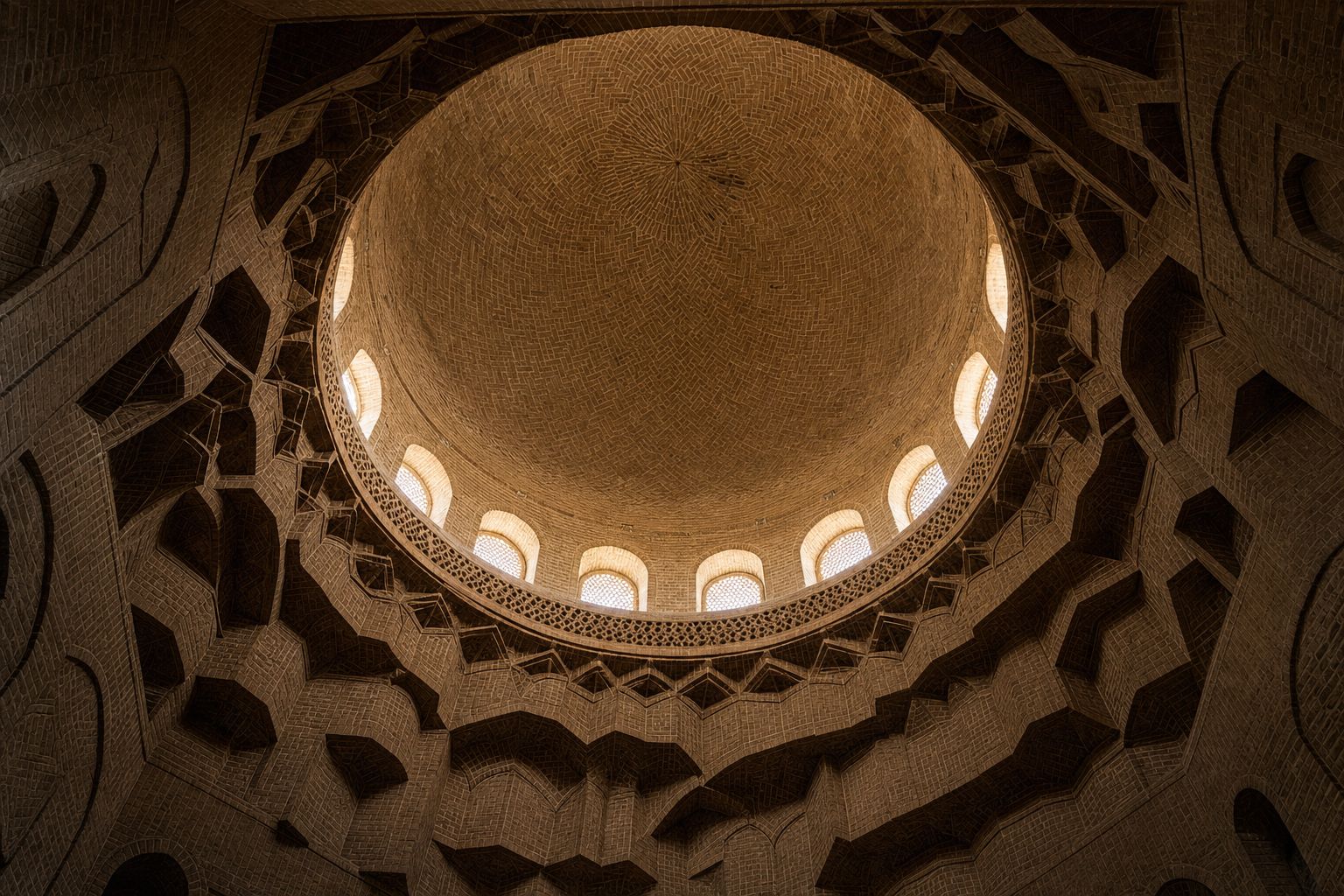
A dome of this kind is a drawing before it is a building. The pattern is set out on paper from a circle and a straightedge, pricked and pounced onto the plaster, and only then cut, glazed and laid. Craft, mathematics and belief arrive at the same surface.
Sinan spent fifty years removing supports. The Sehzade mosque needs four half-domes, the Suleymaniye two, and the Selimiye at Edirne none at all: one dome of about 31.5 metres on eight piers, over a room with nothing in the way of it. He wrote that he had matched Hagia Sophia, and the figures say he had.
The exhibition
London, an exhibition and what stayed behind
In 2005 the Royal Academy of Arts brought together objects from collections across Europe and Asia under the title Turks: A Journey of a Thousand Years, 600-1600. It was the first attempt in Britain to show the whole span of Turkic and Turkish art in one building, and several of the loans had not travelled before.
The exhibition closed, as exhibitions do. What outlives a show of that kind is the scholarship it forced into print and the arrangement it argued for. This site keeps both, in the order the rooms were hung.
- 22 Jan - 12 Apr 2005eleven weeks at Burlington House
- 600-1600the span the show attempted in one building
- Lenders across two continentsmuseums, libraries and private hands from Istanbul to London
Questions
Common questions
The five things people ask most often before they start reading, answered briefly. Longer versions live on the pages themselves.
What does this site cover?
Turkic and Turkish art, history and material culture between 600 and 1600, from the steppe of Inner Asia through the Uighur oases, the Seljuk expansion and the Timurid workshops to the Ottoman court.
Why does it begin in 600 and stop in 1600?
600 is roughly when Turkic-speaking peoples enter the written record under that name. 1600 marks the end of the sixteenth-century Ottoman court style, after which the visual tradition changes character.
Are the Uighurs, Seljuks, Timurids and Ottomans one people?
No. They are distinct groups separated by centuries and by thousands of kilometres, linked by language family and by a set of inherited visual habits rather than by descent.
What is the connection to the 2005 exhibition?
This site is built around the material assembled for Turks: A Journey of a Thousand Years, 600-1600, held at the Royal Academy of Arts in London in 2005. The exhibition closed; the scholarship and the selected works are kept here.
Where should a first-time visitor start?
With the chronology, which gives the shape of the thousand years in one page, and then with the object entries, where the general claims can be tested against something specific.