Masterpieces
Blue-and-white ewer: How It Was Made and What It Records
Ceramic - fifteenth to sixteenth century
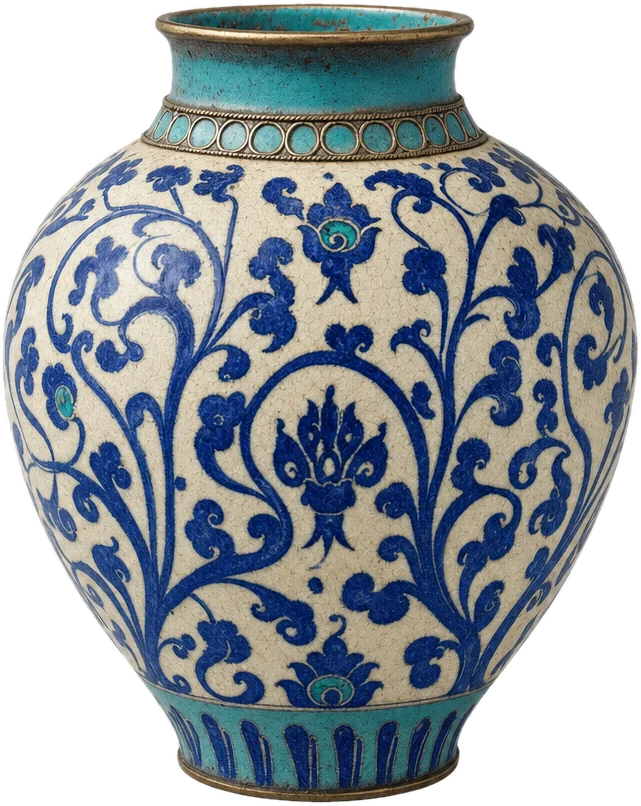
Blue-and-white ewer
Ceramic
fifteenth to sixteenth century
A ewer is a pouring vessel with a spout and a handle, made to be carried to a table or a basin. This one is fritware, a body of ground quartz, white clay and glass frit that fires hard and very white, and it is painted in cobalt under a clear alkaline glaze.
Why the shape is not a potter's shape
The profile, a bulbous body rising to a narrow neck, a long slender spout attached by a strut, a high looping handle, comes from metalwork. Brass and bronze ewers of exactly this outline were being made across Iran and Anatolia for two centuries before the potters took the form over. The strut between spout and neck is the giveaway: it is a solution to a structural problem in cast metal that a ceramic body does not have.
Potters copied metal shapes because metal was the prestige material and because the customer already knew what a ewer looked like. The same borrowing runs the other way later, when metalworkers start reproducing ceramic profiles.
The colour and where it came from
Cobalt is a difficult pigment. It fires reliably blue but it moves in the glaze if the firing is wrong, and the ore had to be traded over long distances. The taste for blue-on-white in this region is inseparable from the arrival of Chinese porcelain along the routes the Mongol conquests had opened in the thirteenth and fourteenth centuries.
What follows is not straightforward imitation. Islamic potters could not make true porcelain, which requires a clay body and firing temperature they did not have, so they built a white ground out of frit and slip and painted on that. The result looks like an answer to porcelain and behaves like something else entirely.
Reading the decoration
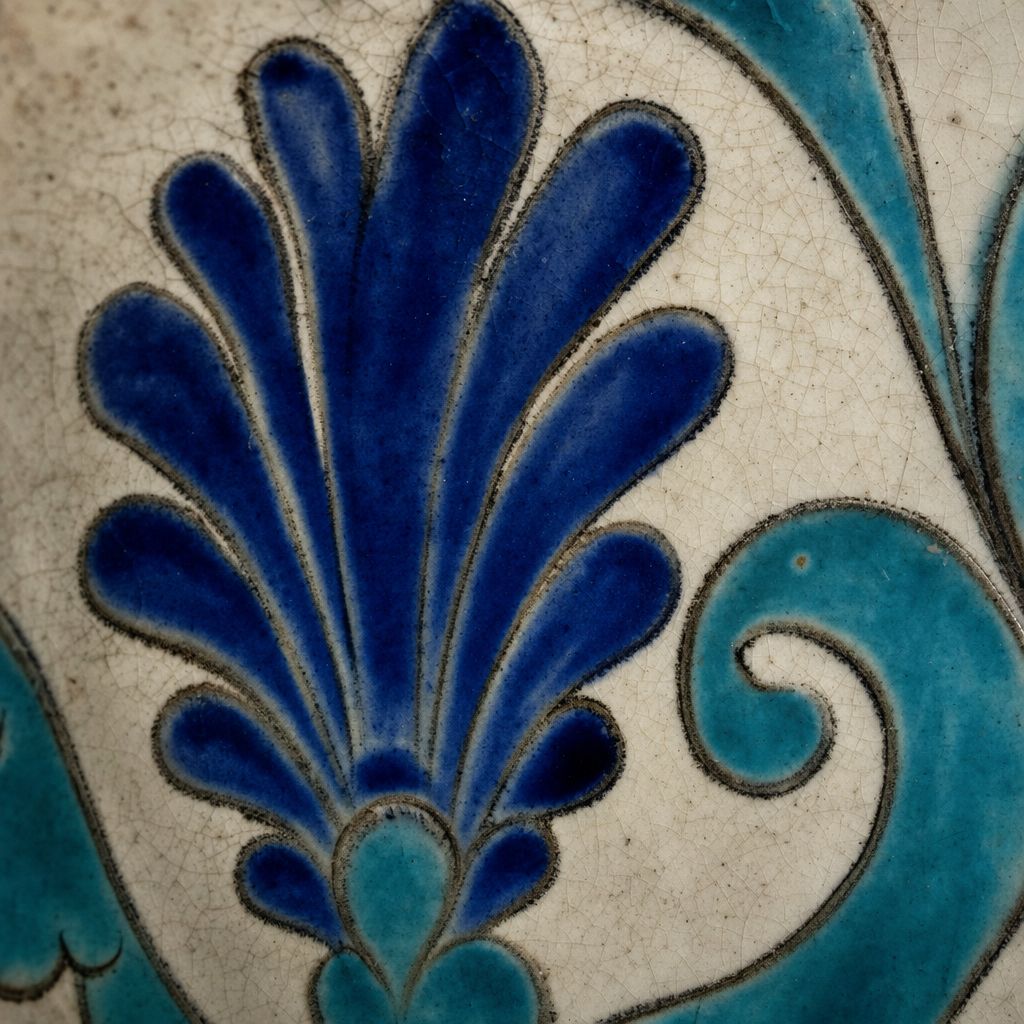
The scrollwork on a vessel of this kind is continuous. A single stem winds around the body, throwing off leaves and palmettes, and it does not begin or end at a visible point. That is deliberate and it is the same instinct that governs a tiled wall: the pattern should read as a fragment of something larger rather than as a composition with edges.
Bands at the neck and foot do the framing instead. They are usually geometric where the body is floral, which sets up a contrast between constructed pattern and grown pattern that recurs throughout this material.
Dating a piece without a date
Almost nothing in this class is dated, so the dating is done by comparison. The body composition can be analysed. The palette narrows the range, because certain colours enter the repertoire at known moments and the sealing-wax red of the mid sixteenth century is a hard boundary. The drawing style is compared against tile panels that are dated, because tile is usually fixed to a building whose construction is documented.
That is a useful reminder about how this material is understood at all. The vessels are dated by the architecture, not the other way round, and a large part of the chronology of Islamic ceramics rests on a relatively small number of securely dated buildings.
What an object like this records
Three things. A trade route, because the cobalt and the idea both travelled. A workshop with a division of labour, because throwing, painting and glazing are separate skills. And a customer with money and a view about what a table should look like, because nobody makes an object this elaborate for a household that would accept a plain one.
Where to see comparable pieces
Vessels of this class are held in most major collections of Islamic art, usually catalogued by body composition and palette rather than by findspot, because so few have one. The absence of archaeological context is the standing problem with the material: a piece bought on the art market in 1890 tells you about ceramics and almost nothing about the household it came from.
Common questions
What is fritware?
A ceramic body of ground quartz, white clay and glass frit. It fires harder and whiter than earthenware and was developed in the Islamic world as an answer to Chinese porcelain, which could not be reproduced directly.
Why blue and white?
Cobalt was the one pigment that fired reliably under an alkaline glaze, and Chinese blue-and-white porcelain arriving along the trade routes had established the combination as the prestige option.
Was a ewer like this used or displayed?
Both. Ewers were functional vessels for pouring at table or over a basin, and objects of this quality were also kept on show.
Where can pieces like this be seen?
Most large collections of Islamic art hold them. The strongest groups are in Istanbul, London, Paris, Berlin and New York; the collections page sets out which holds what.
Look closer
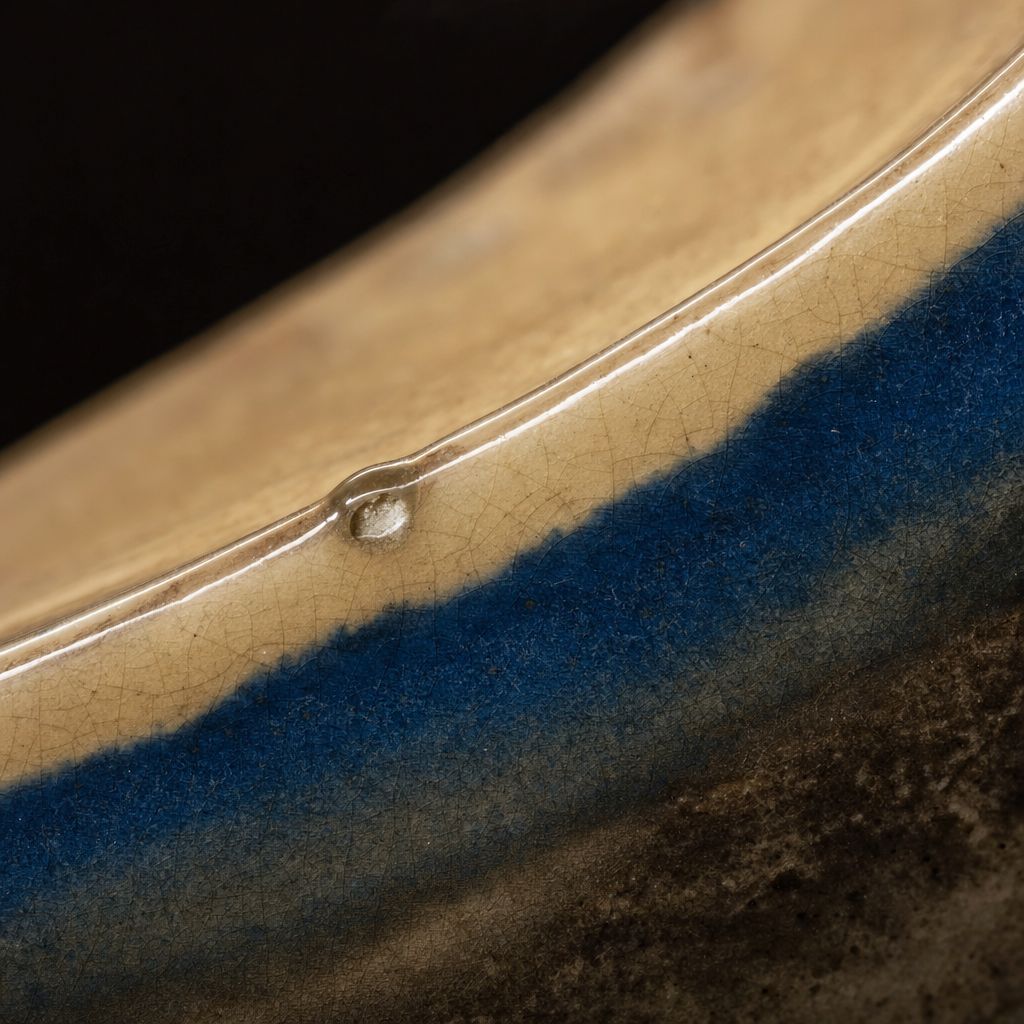
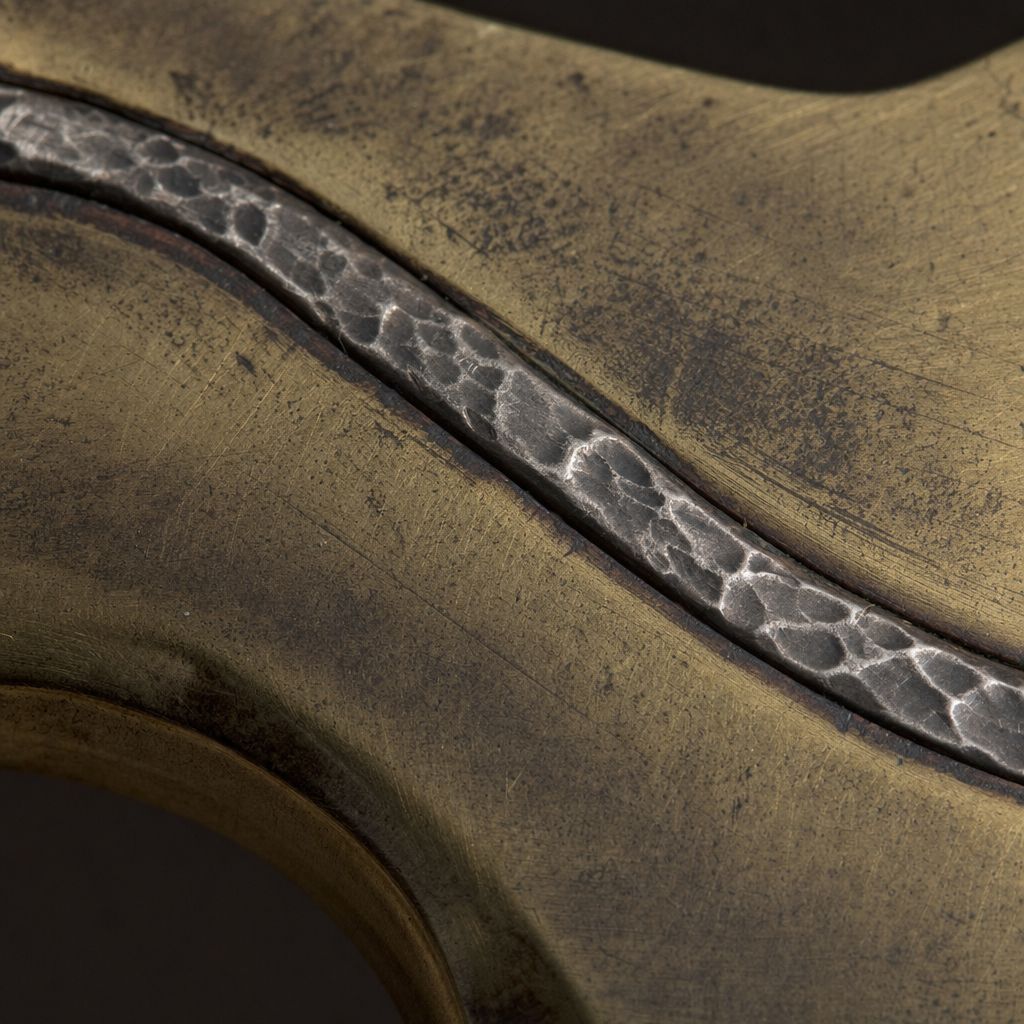
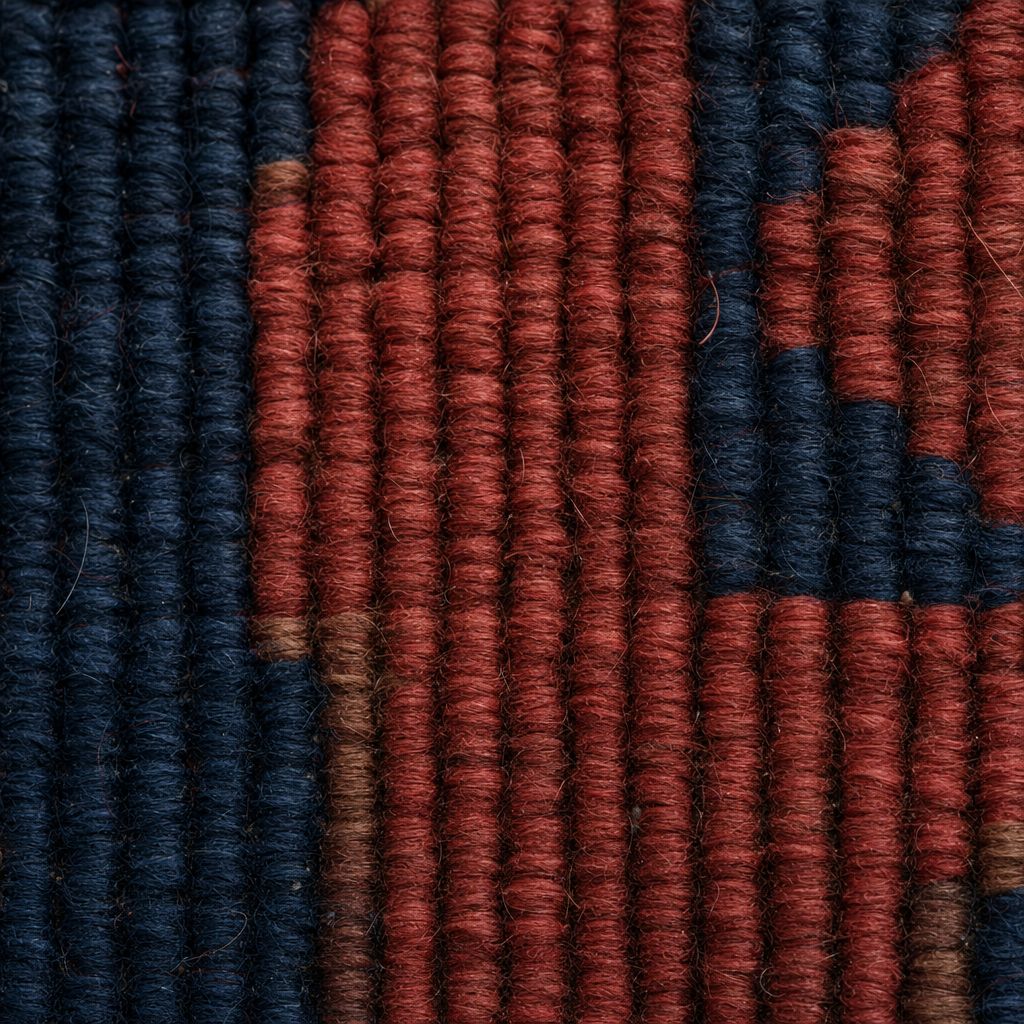
Four things you only see from twenty centimetres
Most of what an object records is at a scale a photograph of the whole thing cannot show. These crops are the evidence the general description rests on.