Masterpieces
Geometric scroll: How It Was Made and What It Records
Ink on paper - fifteenth century
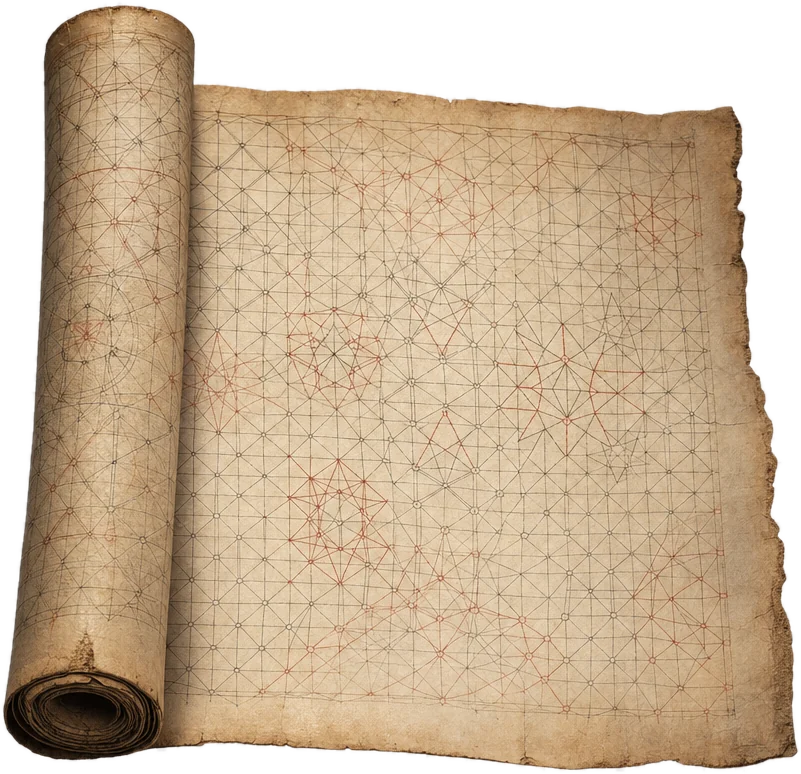
Geometric scroll
Ink on paper
fifteenth century
This is not a finished work. It is a working document: a scroll of ruled construction drawings for interlaced geometric patterns, the sort of thing that lived in a workshop rather than in a library, and that survives by accident.
What is actually on it
Each panel shows a pattern twice over. Faint incised or red construction lines set out the underlying grid, a circle divided into a number of equal parts and the polygons that follow from that division. Over them, in darker ink, is the finished interlace that the construction generates.
Both layers are needed. The construction is how the pattern is reproduced at any scale; the finished drawing is how the craftsman knows what he is aiming at. A scroll of this kind is closer to a set of engineering drawings than to a pattern book of designs to be admired.
Why patterns were built rather than drawn
An interlaced star pattern cannot be drawn freehand at architectural scale and stay true. It has to be constructed, and the construction is a procedure: divide a circle, join the divisions, extend the lines, take the intersections as new centres. A craftsman who knows the procedure can lay out a wall of any size with a cord, a straightedge and a compass.
This is why the same patterns appear in tile, timber, stone, plaster and book binding, in materials that share no technique. What is shared is the geometry, and the geometry is portable in a way that a carving is not.
The people who made them
Medieval treatises describe a category of practitioner sitting between the mathematician and the mason: someone who understood the geometry well enough to construct it but who was concerned with building rather than with proof. Texts on the geometry required by craftsmen were written for exactly that audience.
That relationship is one of the more remarkable things in this material. Abstract mathematics and building trades were in genuine contact, and the evidence is on the walls.
From paper to wall
The transfer was physical. A drawing could be pricked along its lines and pounced with charcoal dust onto plaster, or scaled up by grid, or reproduced directly on site from the construction procedure. Each method leaves traces, and pounced dots survive under paint on more than one surviving surface.
This is the point at which design and execution separate into two jobs. The person who set out the pattern and the person who cut the tile need not be the same, need not be in the same city and, in the Ottoman case, demonstrably were not. A drawing office issuing patterns to distant workshops is only possible because the pattern can travel on paper.
What a scroll like this proves
It proves that the patterns were transmitted as method, not as images. A workshop did not copy a wall it had seen; it carried a procedure that could regenerate the wall. That explains both the consistency of the tradition across enormous distances and its capacity to produce patterns that had never been made before.
It also settles a question the finished buildings cannot. Looking at a tiled surface, it is impossible to tell whether the maker understood the geometry or was copying a template. The scrolls show that at least some of them understood it completely.
What survives, and where
Very few scrolls of this kind are known. Workshop material was consumable, and once a pattern had been transferred it had no display value. The handful that survive are therefore evidence out of all proportion to their number, and each one has been studied far more intensively than any single wall it may have produced.
Common questions
What is a construction line?
A faint guide line, usually incised or drawn in red, that sets out the grid from which the finished pattern is generated.
Why construct a pattern rather than copy it?
Because construction can be scaled to any wall. A copied template cannot, and it will not stay true at architectural size.
Who used scrolls like this?
Building workshops. They are working documents rather than presentation pieces, which is why so few survive.
Do scrolls like this survive in numbers?
No. Workshop material was consumable and had no display value once the pattern had been transferred, so the handful that survive are studied intensively.
Look closer
Four things you only see from twenty centimetres
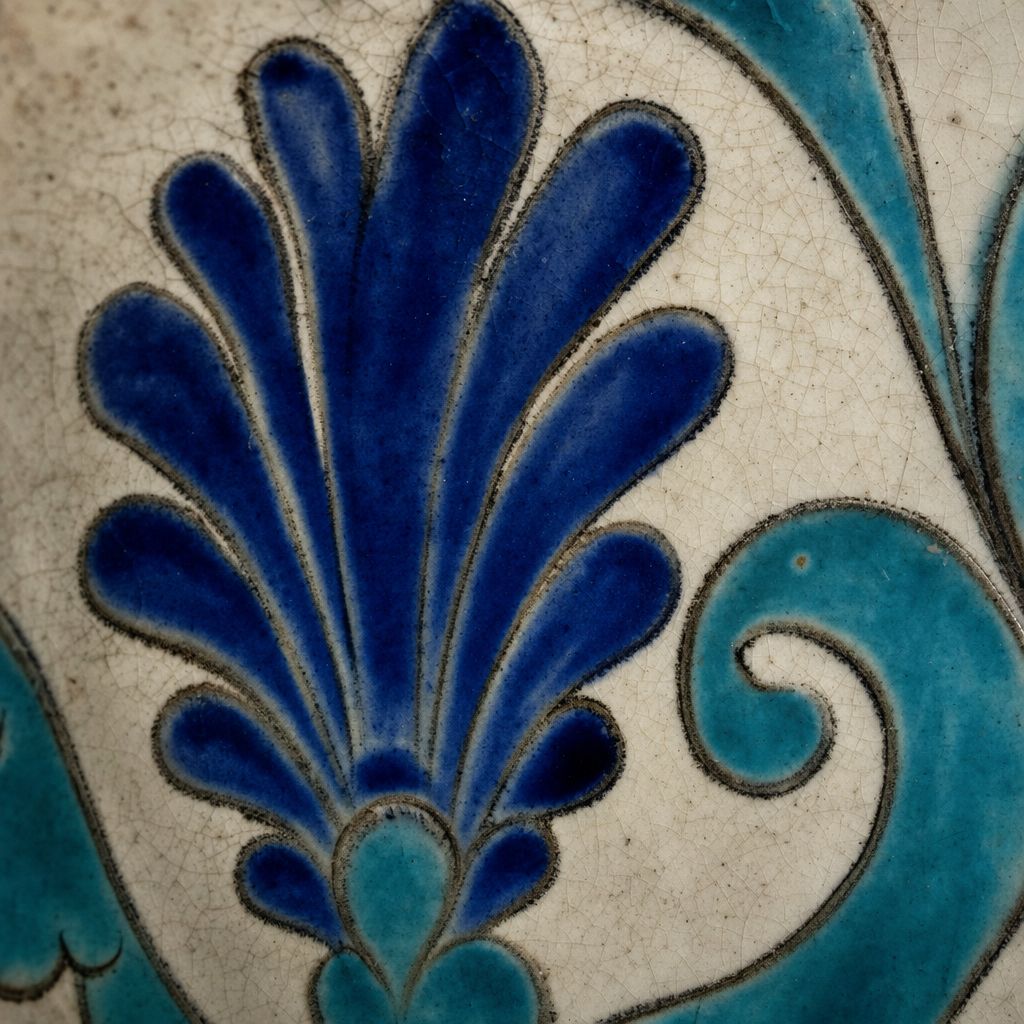
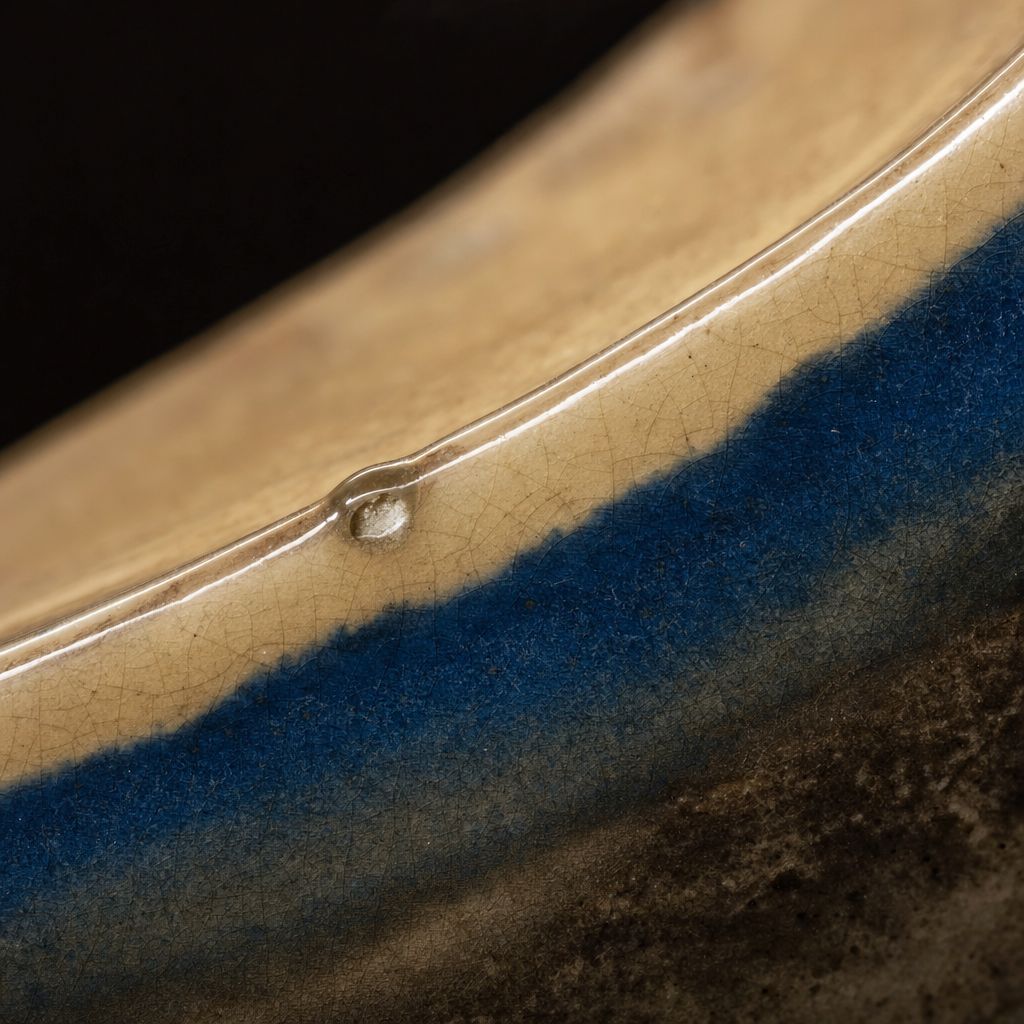
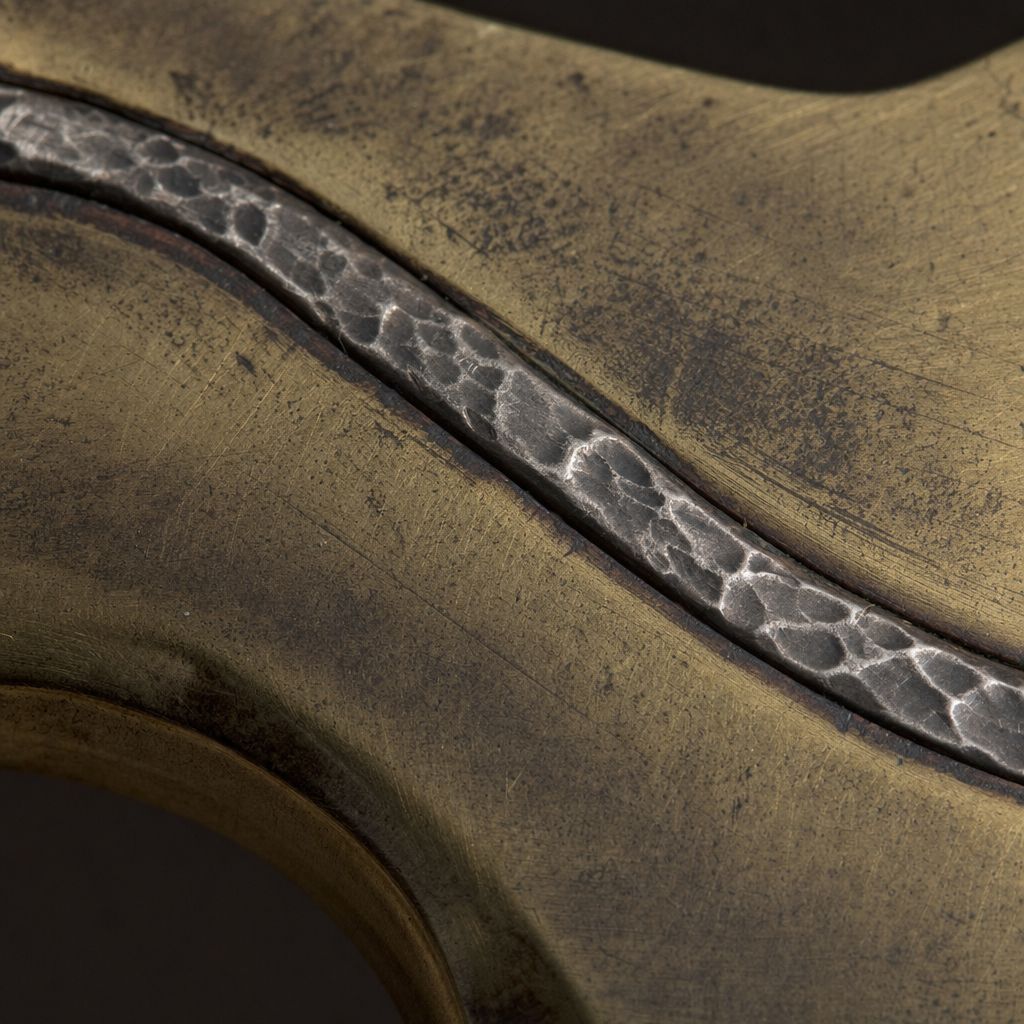
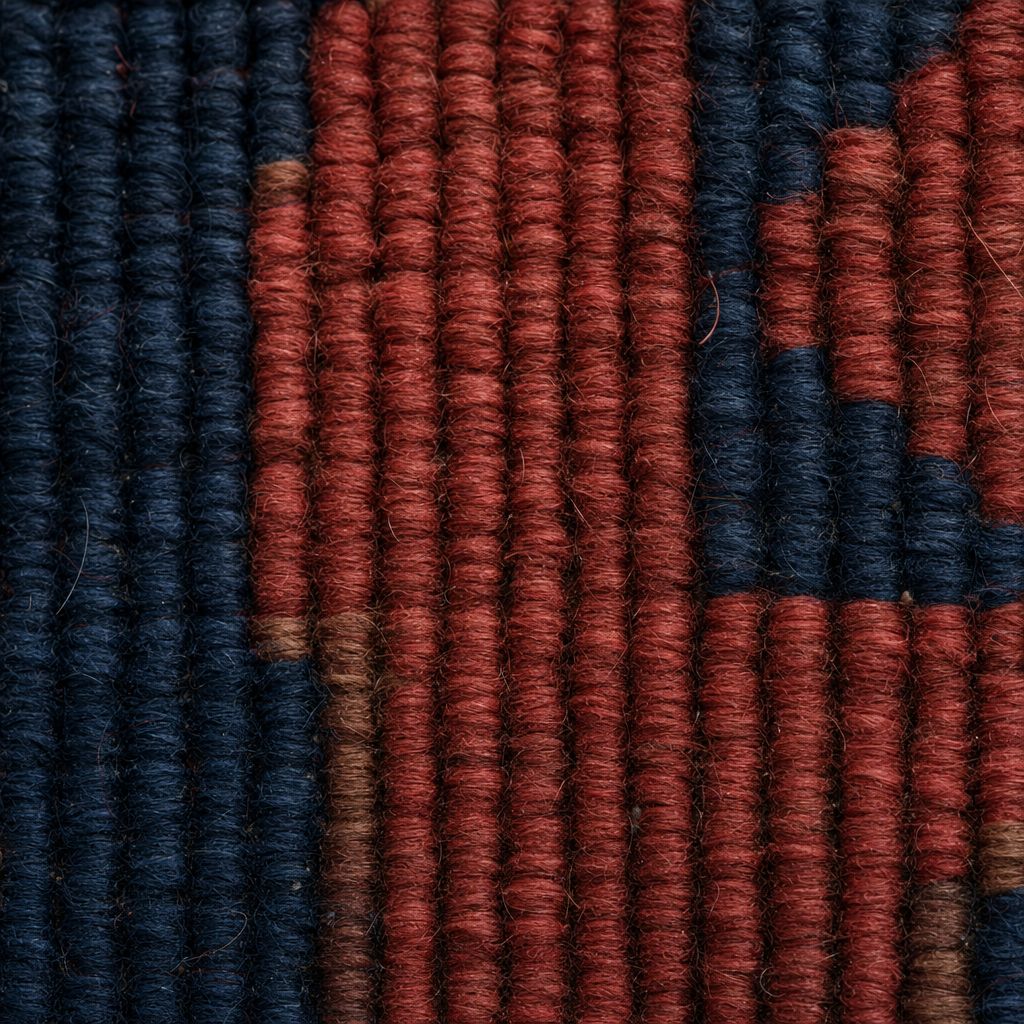
Most of what an object records is at a scale a photograph of the whole thing cannot show. These crops are the evidence the general description rests on.