Masterpieces
Silk brocade: How It Was Made and What It Records
Silk and metal thread - sixteenth century
Silk brocade
Silk and metal thread
sixteenth century
Textiles were the most valuable portable goods in this economy, and the least likely to survive. What is left is a fraction of a fraction, mostly preserved because it was cut up and reused as lining, binding or a reliquary wrapper in a European church treasury.
What brocade means here
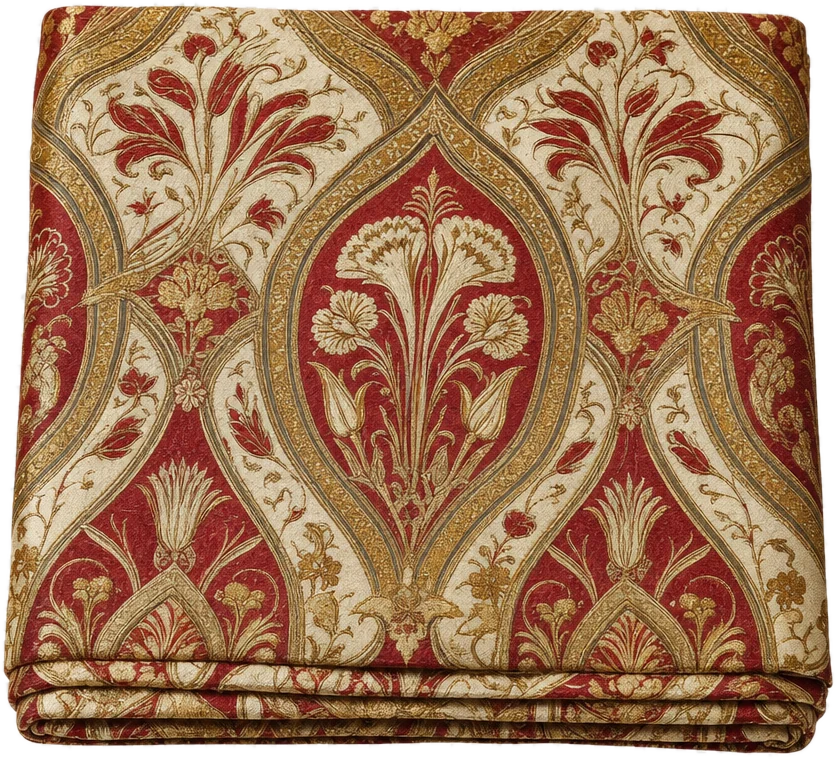
The ground is a silk weave, usually satin or twill, and additional wefts of coloured silk and metal thread are carried across the surface to build the pattern. Metal thread in this period is normally a strip of gilded animal substrate wound around a silk core, which is why it can be woven at all and why it degrades so readily.
Weaving this on a drawloom needs two people: the weaver and a drawboy who lifts the pattern harness. The pattern is set up once, at considerable cost, and then repeated for the length of the piece, which is why textile design in this period repeats rather than composes.
The ogival medallion
The pointed-oval lattice that organises so many of these silks is not a motif so much as a structure. It comes out of the loom: a repeating unit that can tile the plane vertically and horizontally without an obvious seam, and that gives the designer a bounded field to fill.
Inside the medallions the vocabulary is the court one, carnation, tulip, saz leaf and rosette, the same drawings the tile workshops were using. Between them the ground is rarely left plain.
Silk as currency
Court textiles functioned as payment. Robes of honour were given to officials, to foreign envoys and to subordinate rulers, and the grade of cloth was calibrated to the recipient's standing. Registers survive listing who received what.
That gives a length of brocade a documentary quality. It is not only a design; it is a unit of a system in which cloth did the work that a salary and a medal do now, and the quantity of it moving through a treasury in a year is a measurable index of how the state functioned.
Scale, and how to read a fragment
The repeat unit on court silks of this period can be very large, sometimes half a metre or more, which means a surviving fragment often contains less than one complete motif. Reading such a piece involves reconstructing the pattern from an incomplete arc, and mistakes are easy.
Scale also carries meaning. Large-pattern silks were for robes of state and for furnishing, where the design would be seen at a distance and in motion. Smaller repeats belong to lining, to smaller garments and to sale rather than to gift. The size of the motif is therefore a reasonable first guide to what a fragment originally was.
Why so little is left
Silk is eaten, faded, worn and reused. Metal thread is stripped and melted, and there was a trade in burning old brocade to recover the gold. Anything that stayed in use as clothing was worn out; anything that stayed in a treasury was cut down.
The consequence for this history is a large blind spot. For a culture that came out of a felt-and-textile economy, the textile record is the thinnest part of the surviving material, and the ceramics and metalwork are over-represented as a result.
Where the surviving pieces are
Church treasuries in Italy, Germany and Spain hold a disproportionate share, because Islamic silks were prized in Europe and were used to wrap relics, line reliquaries and make vestments. The irony is standard for this material: the objects survive because they were taken out of the context that explains them.
Common questions
What is metal thread made of?
A strip of gilded animal substrate wound around a silk core, which allows it to be woven and also makes it fragile.
Why do textile patterns repeat?
Because the drawloom is set up once for a pattern unit and then repeats it for the length of the cloth. The repeat is a property of the machine.
Why is so little textile preserved?
Silk is worn out, eaten and faded, and metal thread was recovered by burning old cloth. Most survivals were reused in European church treasuries.
How does this relate to Turkish carpets?
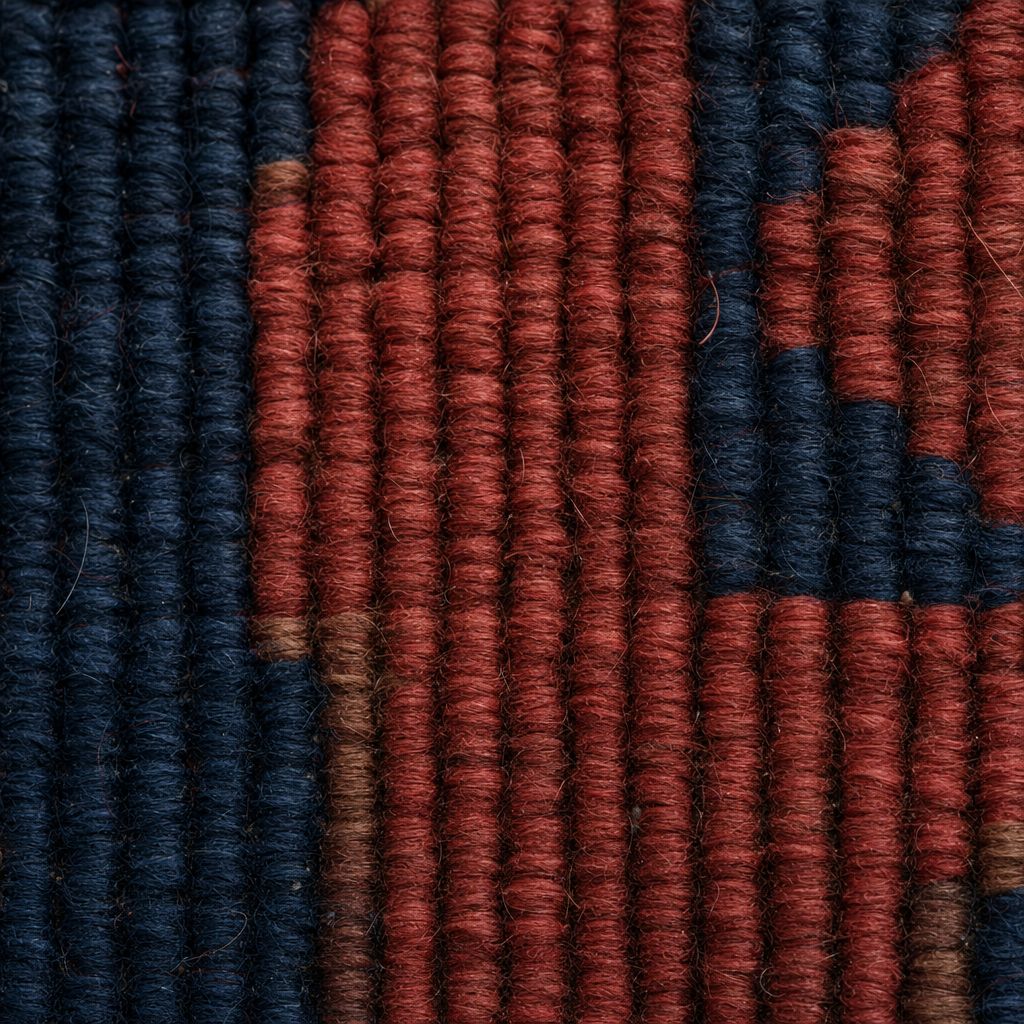
Both are woven, both were graded by rank and both worked as gifts and payment, but the loom and the vocabulary differ; see carpets and kilims.
Look closer
Four things you only see from twenty centimetres
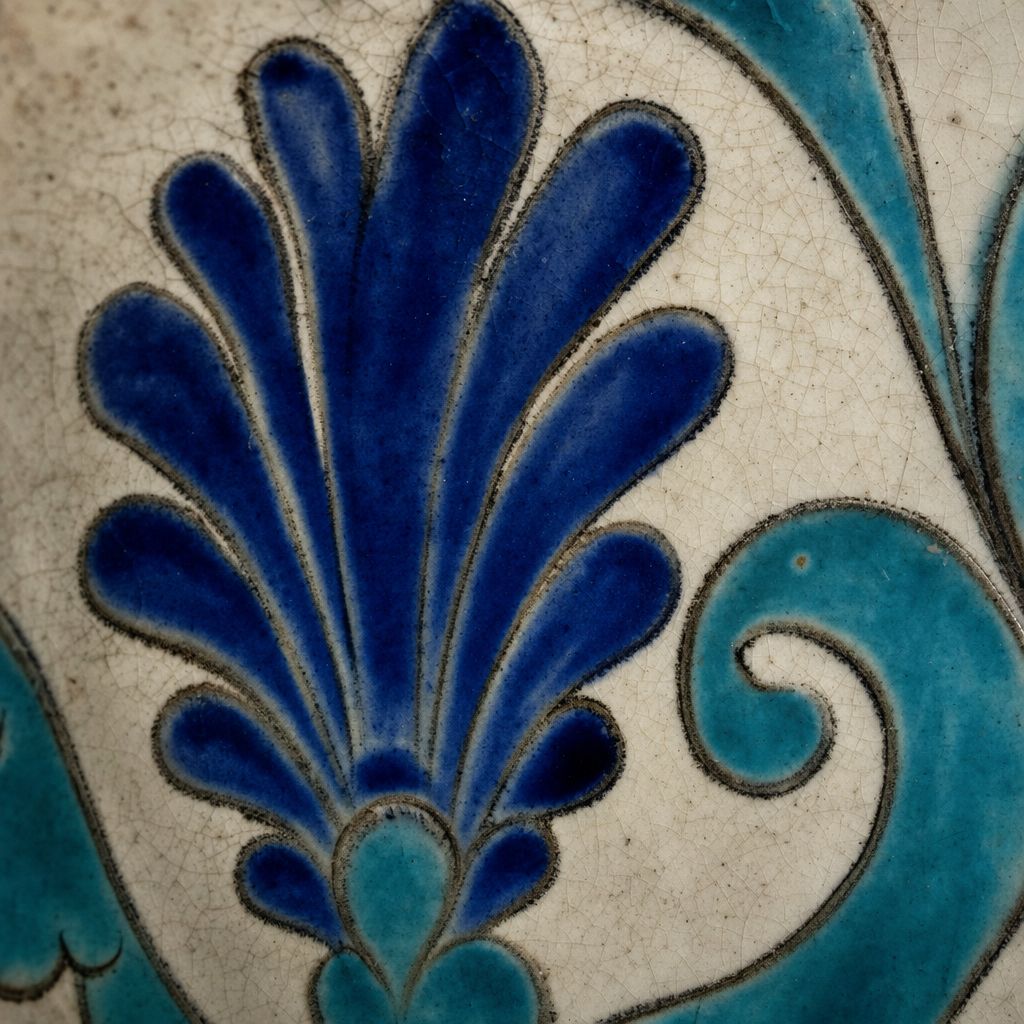
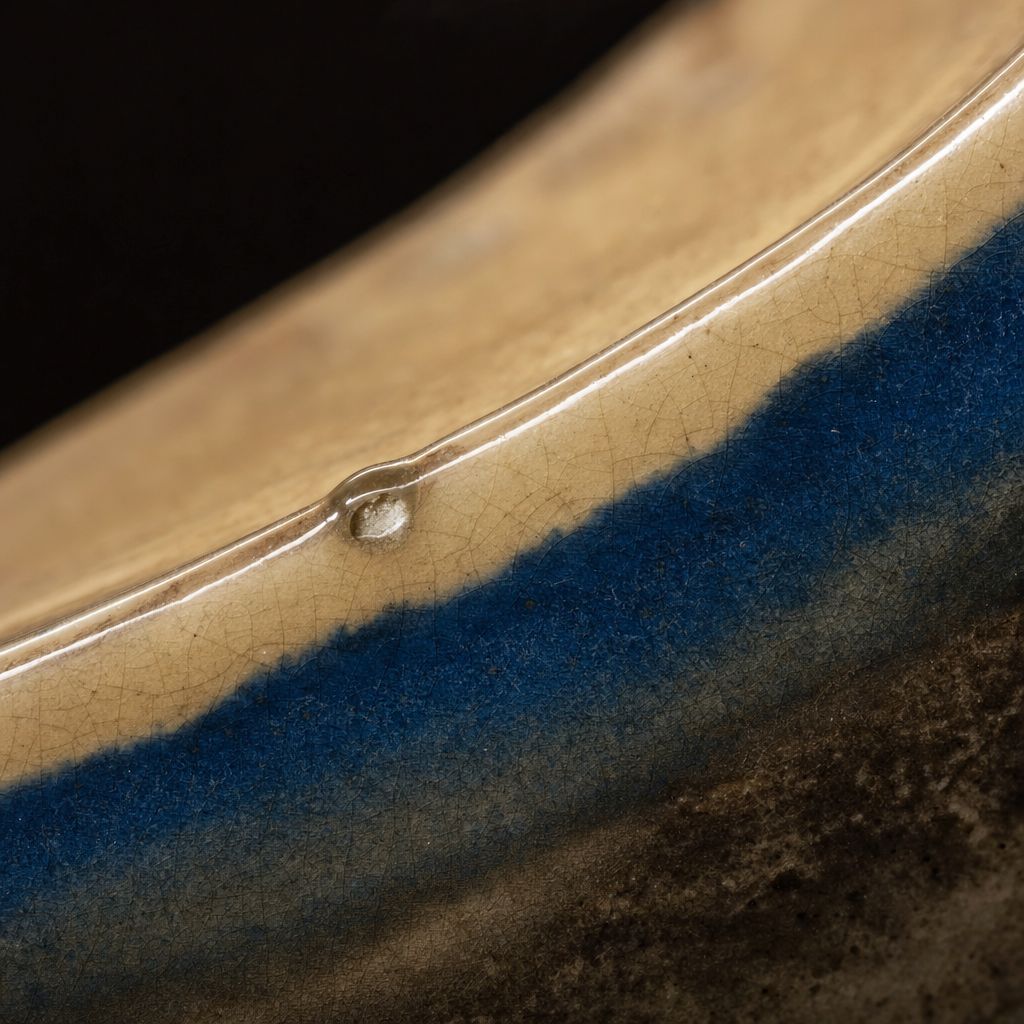
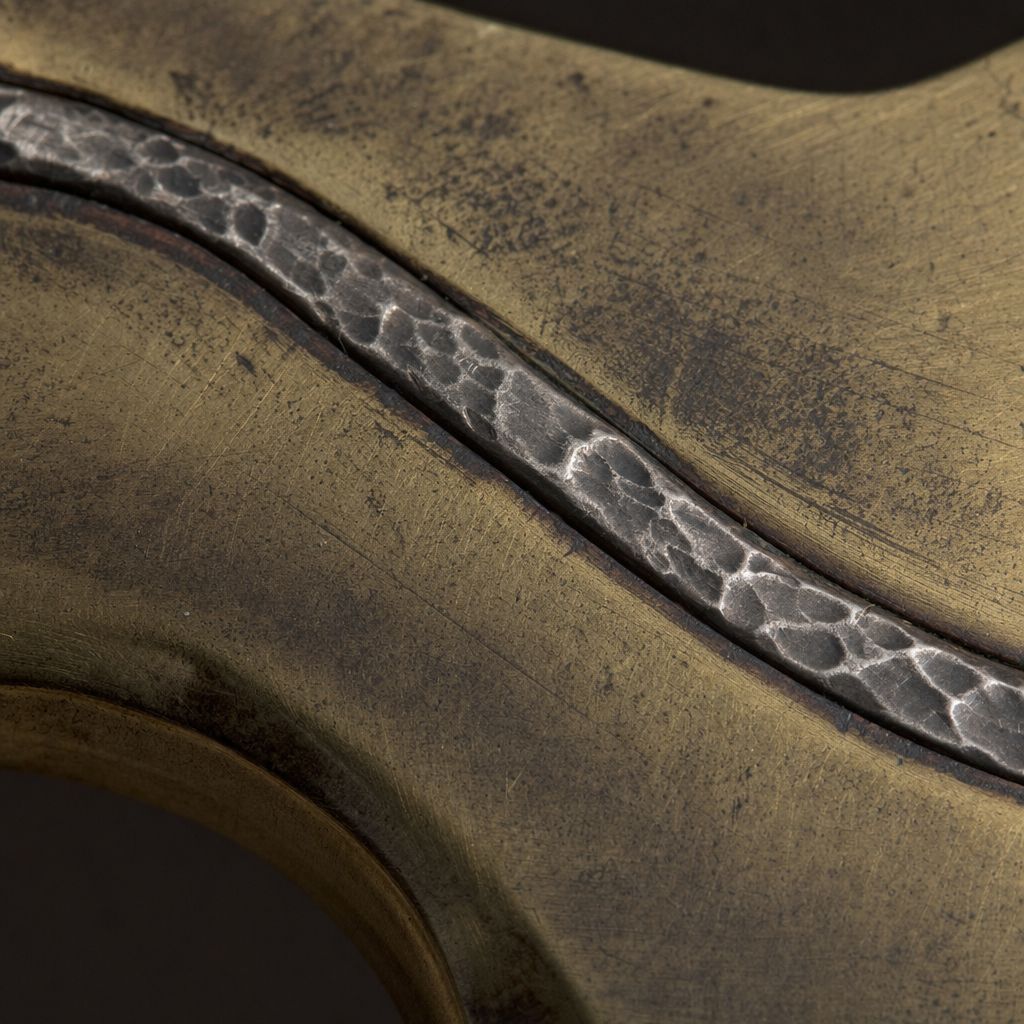
Most of what an object records is at a scale a photograph of the whole thing cannot show. These crops are the evidence the general description rests on.