Masterpieces
Ceremonial helmet: How It Was Made and What It Records
Steel and gold - sixteenth century
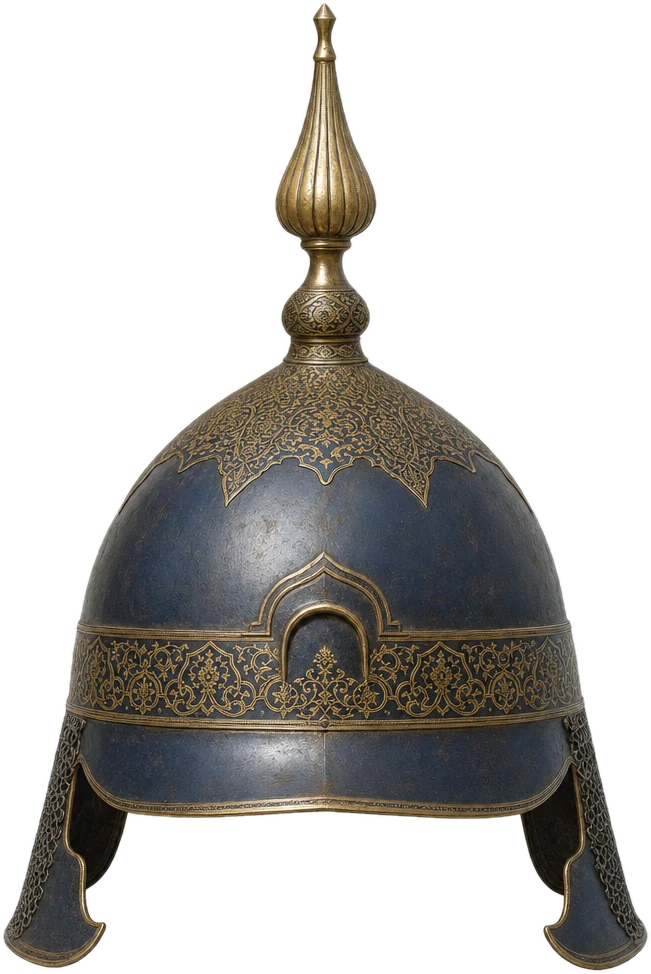
Ceremonial helmet
Steel and gold
sixteenth century
This is a parade helmet, not a battlefield one. The distinction matters and it is visible in the object: the decoration is on the surfaces an observer sees, the finial is tall enough to be a liability in a fight, and the gold work would not survive a season of campaigning.
How it was made
The dome is raised from steel, either from a single sheet worked over a stake or from segments joined and then finished, and the fluting is hammered in rather than cut. Fluting stiffens a curved sheet, so it is structural as well as decorative, which is a fair summary of most good armour ornament.
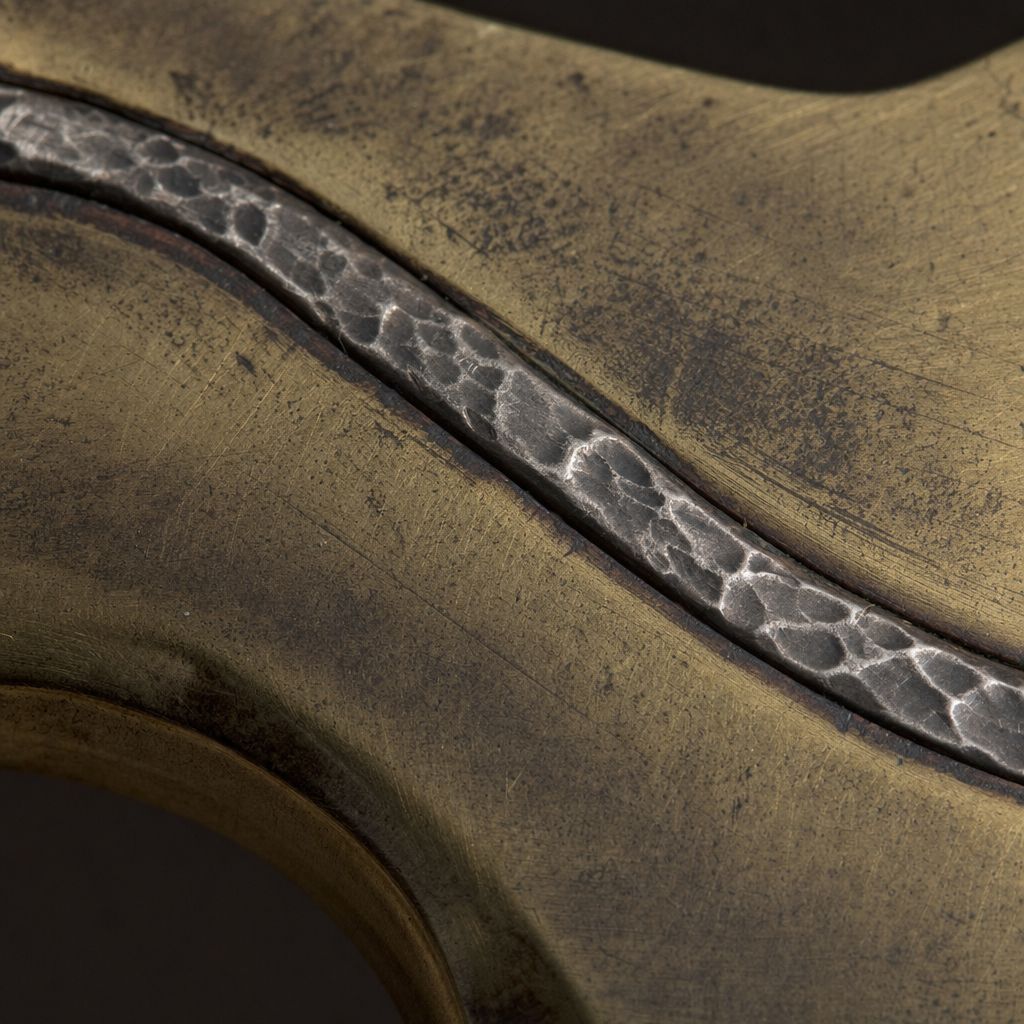
The gold is damascened. Fine grooves are cut or punched into the steel, gold wire is laid into them and hammered flush, and the whole surface is then polished. It is slow work and it is repairable, which is why damascened decoration turns up on objects that were kept for generations.
What parade armour was for
Court ceremonial in this period was a working part of government. Processions, receptions of foreign embassies and the display of the ruler's household were how authority was made visible to people who would never read a decree. Armour in that context is closer to uniform than to protection.
Helmets of this type were also given. Diplomatic gifts moved between courts constantly, and a piece of arms and armour was a particularly loaded thing to send, being simultaneously a compliment, a demonstration of workshop capacity and a reminder of capability.
The ornament and its sources
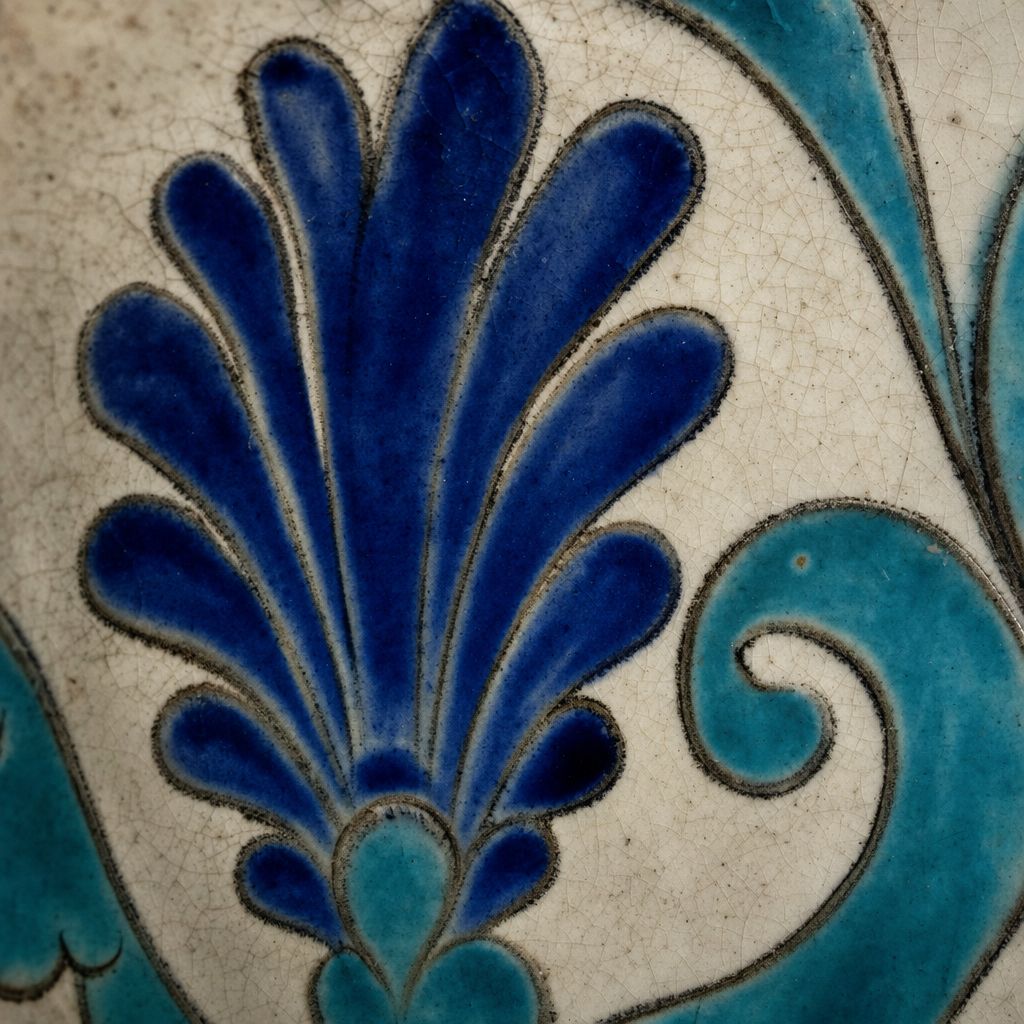
The bands of arabesque running around the dome are the same vocabulary that appears on tile and on manuscript illumination. The reason is administrative rather than accidental: the pattern was designed on paper, in a workshop that supplied designs to several trades at once.
Calligraphic bands often accompany the arabesque. On helmets the texts are typically protective verses or invocations, which places the object in a category that is at once military, ceremonial and devotional.
The turban helmet and its shape
A distinctive group of fifteenth-century helmets is bulbous rather than conical, swelling out above the brow before narrowing to the finial. The form is usually explained as accommodating a turban wound underneath, which is plausible and is where the modern name comes from.
Whether or not that is the whole explanation, the shape has a consequence: it presents a large convex field to the eye, and the decoration is organised around that field in horizontal bands rather than radiating from the crown. Function and ornament arrive at the same solution, which is the usual pattern in good armour.
Condition and what survives
Steel does not survive well. Most helmets of this period that reach a collection have lost their mail aventail, their lining and often their nasal bar, all of which were organic or lightly attached. What tends to remain is the dome itself, which is why the type is usually seen without the parts that made it wearable.
That skews the impression. A helmet on a stand reads as sculpture. The same object with mail hanging to the shoulders, a padded cap inside and a sliding nasal down over the face reads as equipment, and that is closer to what it was.
Arms as a category
Arms and armour sit awkwardly in art history. They are catalogued as decorative art, studied by specialists in military technology, and displayed as sculpture, and the three approaches rarely meet. An object like this belongs to all of them at once: it is a piece of engineering, a piece of court theatre and a surface carrying the same drawings as a tile panel.
Common questions
What is damascening?
Inlaying gold or silver wire into fine grooves cut in a steel surface, then hammering it flush and polishing. It produces line decoration that sits level with the metal rather than standing proud of it.
Was this kind of helmet worn in battle?
Not usually. The decoration, the tall finial and the finish all point to ceremonial use, and the gold work would not survive campaigning.
What is missing from most surviving helmets?
The mail aventail, the padded lining and often the nasal bar. All were organic or lightly attached and rarely survive.
Where can armour of this kind be seen?
The Topkapi armoury in Istanbul holds the largest group. Substantial holdings exist in London, Paris, Vienna and New York; see the collections page.
Look closer
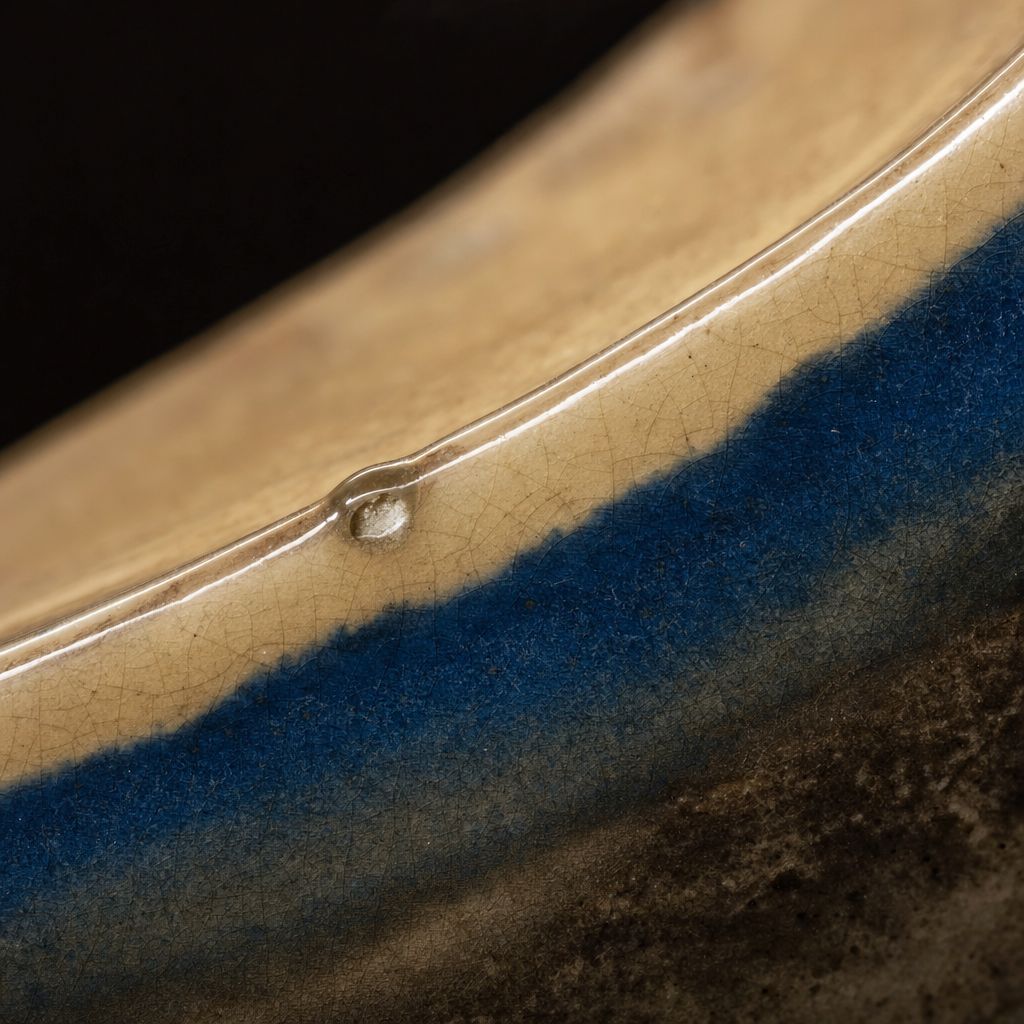
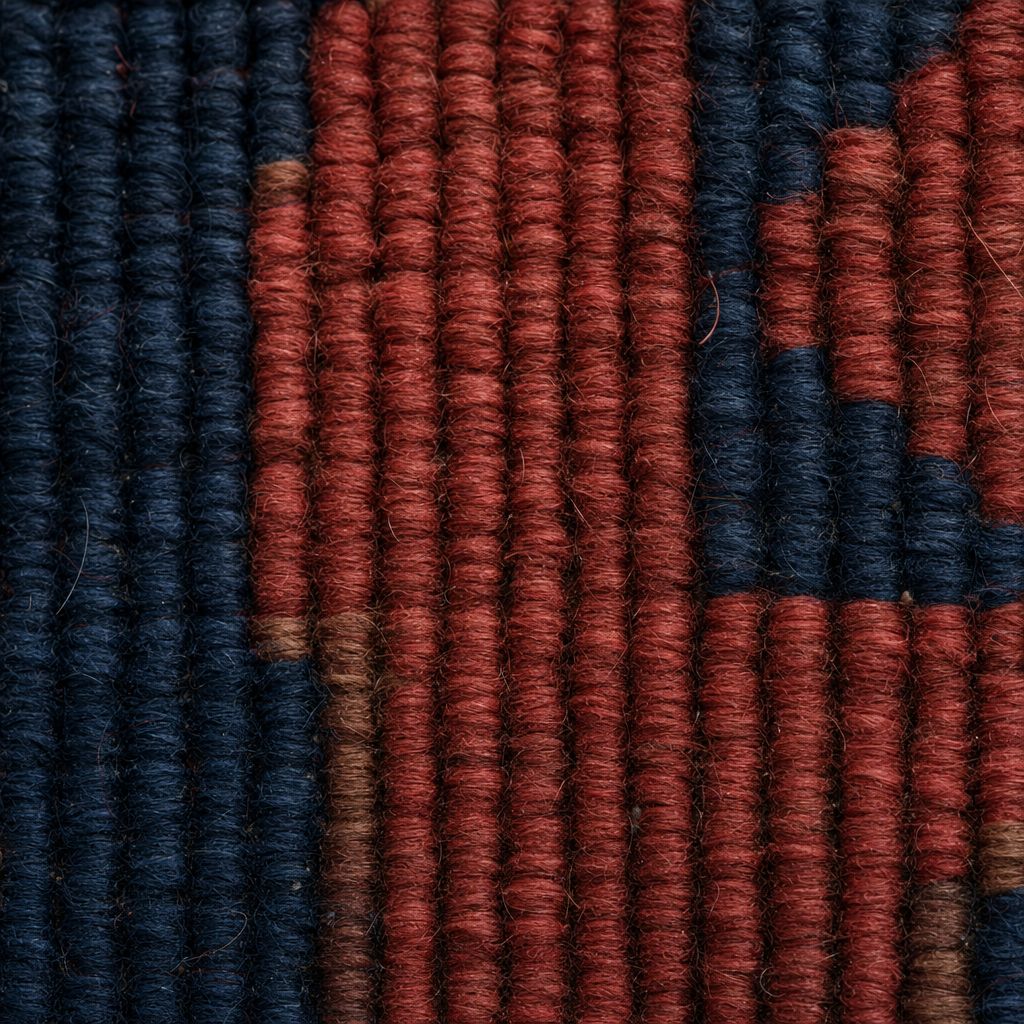
Four things you only see from twenty centimetres
Most of what an object records is at a scale a photograph of the whole thing cannot show. These crops are the evidence the general description rests on.