Masterpieces
Inlaid bowl: How It Was Made and What It Records
Brass with silver inlay - thirteenth century
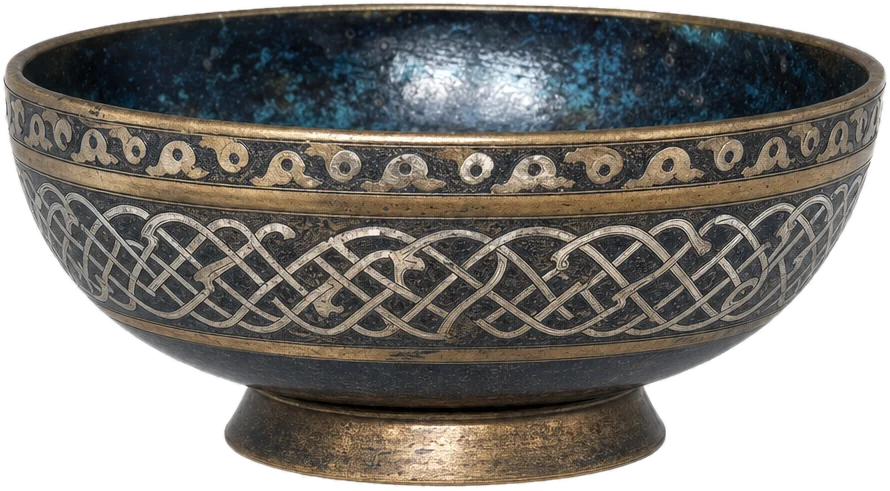
Inlaid bowl
Brass with silver inlay
thirteenth century
Inlaid metalwork is the technical high point of thirteenth-century craft in this region, and a bowl is the clearest way to see why. The body is cast or raised brass. The decoration is silver, and sometimes copper, hammered into channels cut in the surface.
The technique
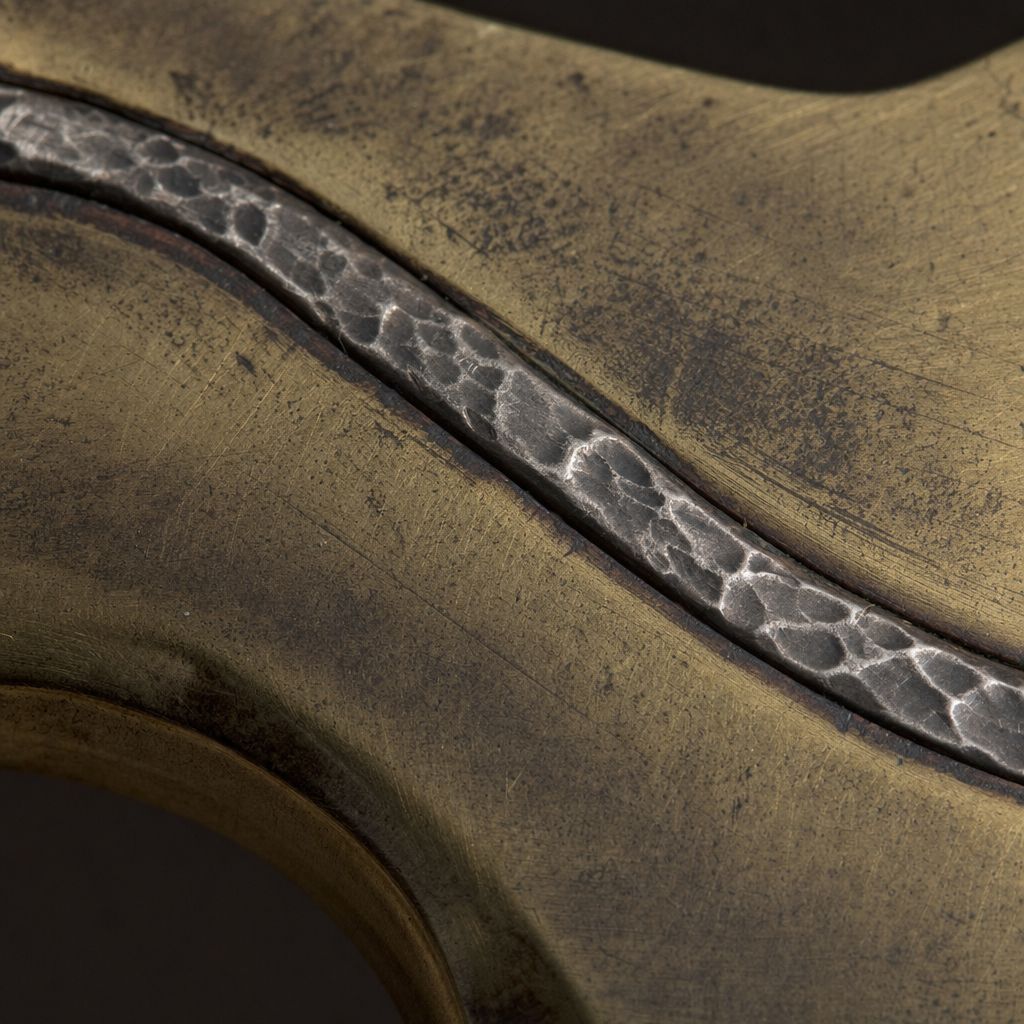
The metalworker cuts a channel slightly undercut at the edges, so the sides lean inwards. Silver wire or sheet is then laid in and hammered, and the metal spreads to fill the undercut and locks itself in place mechanically. No solder, no adhesive. When the surface is polished flat the silver sits flush with the brass and the drawing reads as line rather than as relief.
Done well it lasts centuries. Done badly the inlay lifts, and a great many surviving pieces have lost most of their silver, which is why so much museum metalwork of this period looks like a ghost of itself.
Where the craft was practised
The tradition is usually traced to Herat in the twelfth century and follows the disruptions of the period westward: metalworkers move to Mosul, then to Damascus and Cairo, and signed pieces let the movement be tracked with unusual precision. Craftsmen in this trade signed their work more often than in almost any other, sometimes with a place of origin attached.
That is why inlaid brass is such useful evidence. An object can carry a maker, a place and occasionally a date, and the sequence of signatures maps the dispersal of a workshop tradition under political pressure.
Reading the surface
The organisation is nearly always the same: horizontal registers, a broad principal band with narrower ones above and below, and roundels interrupting the main band at intervals. Inside the bands the field is filled with interlace, arabesque or a running inscription in ornamental script.
Figures appear more often on metalwork than on almost anything else from this period. Enthroned rulers, musicians, hunters and astrological personifications are all common, flattened into the pattern rather than modelled.
Copper, silver and the question of colour
Inlay is not always silver. Copper is used alongside it, and a well-preserved piece shows three tones: yellow brass ground, white silver line and red copper accent. Almost no surviving object still reads that way, because copper corrodes green and silver blackens, and centuries of polishing have taken the rest.
Reconstructions and the rare unpolished survivals suggest the original effect was much closer to painting than the current appearance implies. The decoration would have read as coloured fields, not as engraved line, and the figures inside the roundels would have stood out from the ground rather than merging into it.
What it was for
Objects of this quality served at table and were displayed when not in use. Basins, ewers, candlesticks, pen boxes and trays make up the bulk of the surviving corpus, which is to say the objects of a literate household with guests.
A pen box in particular says something specific: the owner wrote, or wanted it understood that he did. Inlaid metal is one of the few places in this material where the objects of intellectual life are given the same treatment as the objects of the table.
Fakes and later additions
Inlaid brass has been reproduced continuously since the nineteenth century, some of it as honest revival work and some of it not. The tests are technical: the profile of the channel, the way the silver sits, the composition of the alloy and the character of the script, which later hands rarely get right. A great deal of what entered collections before 1920 has since been reassessed.
Common questions
How is metal inlay held in place?
Mechanically. The channel is cut with undercut edges, and the hammered silver spreads to fill it and locks itself in. No solder is used.
Why do so many pieces look bare?
Because the silver has been lost. Inlay lifts over time, and many surviving vessels retain only the cut channels where the decoration was.
Why is signed metalwork important?
Metalworkers in this tradition signed unusually often, sometimes with a place of origin, which lets the movement of the craft between cities be tracked with rare precision.
Who made inlaid metalwork?
A named, mobile profession. Signatures with places of origin let the craft be tracked from Herat to Mosul, Damascus and Cairo; see artists and makers.
Look closer
Four things you only see from twenty centimetres
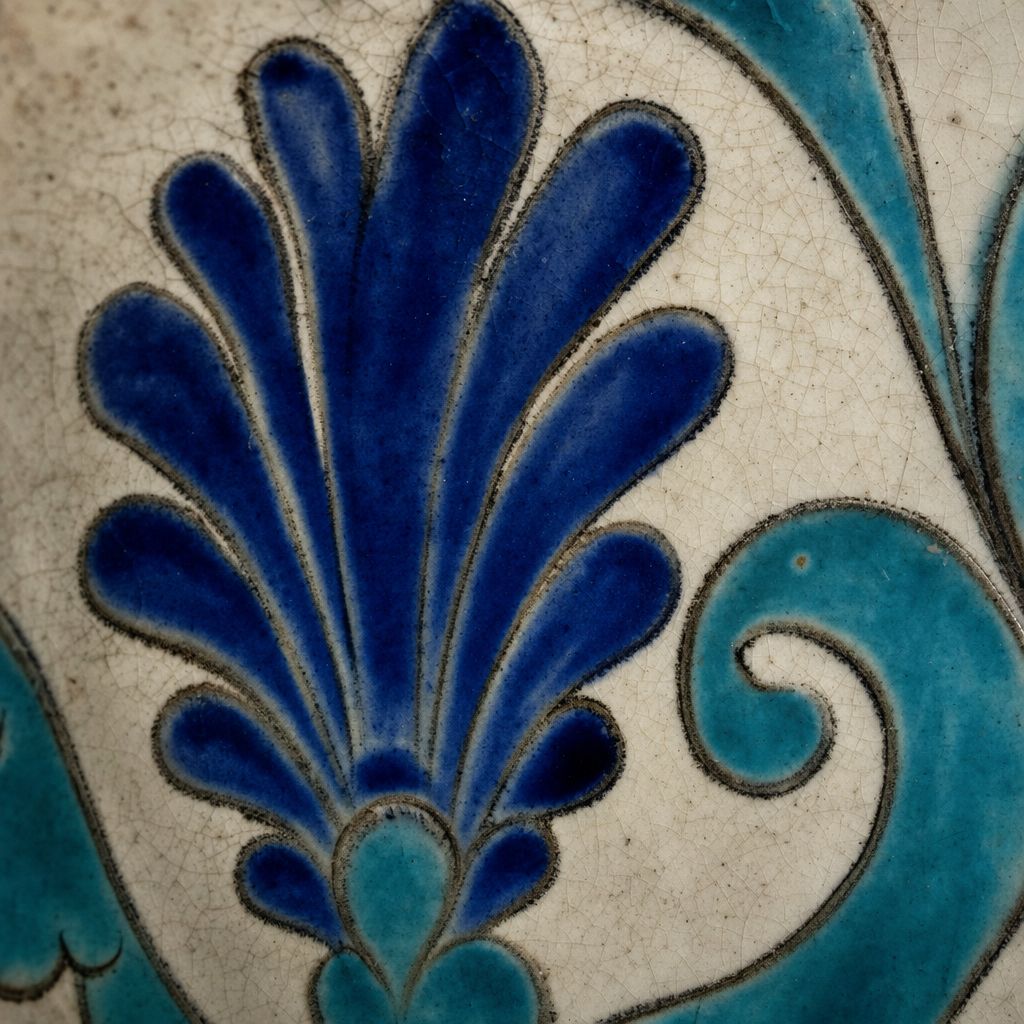
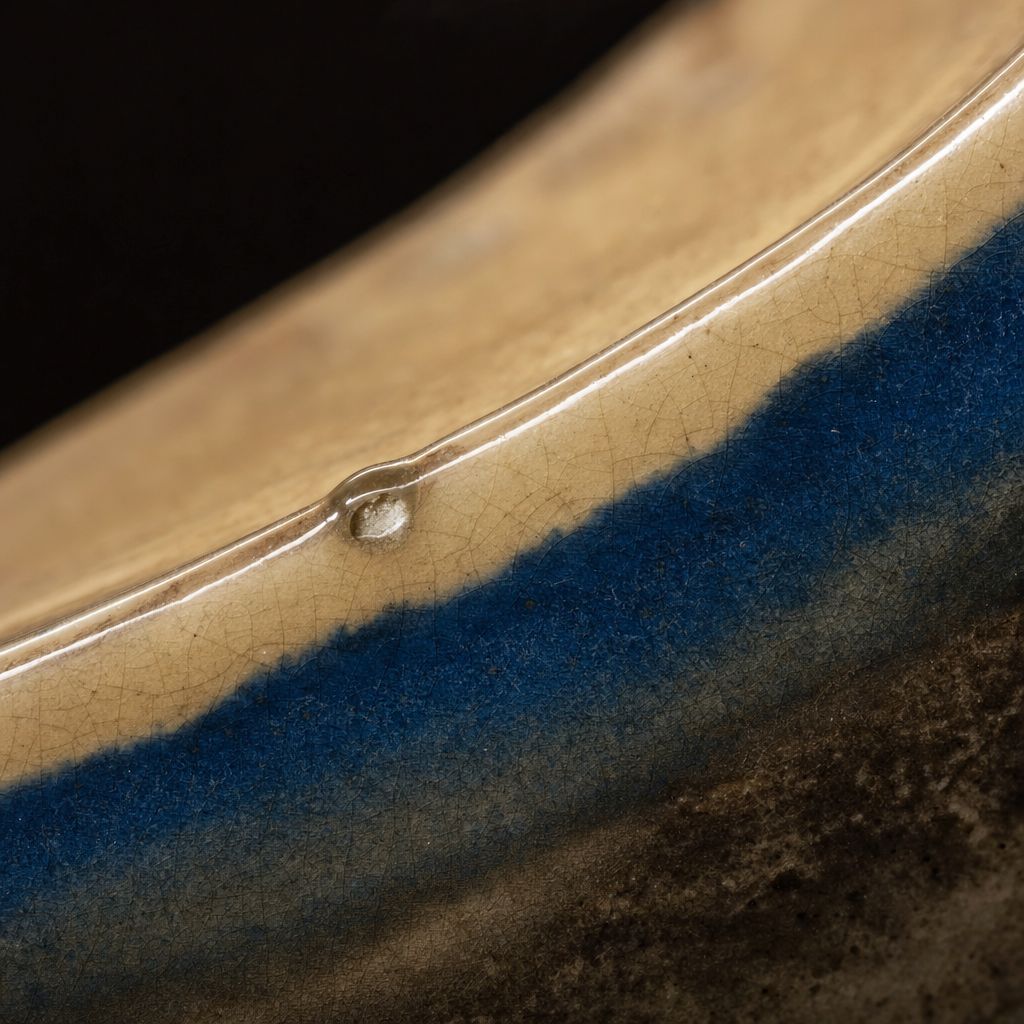
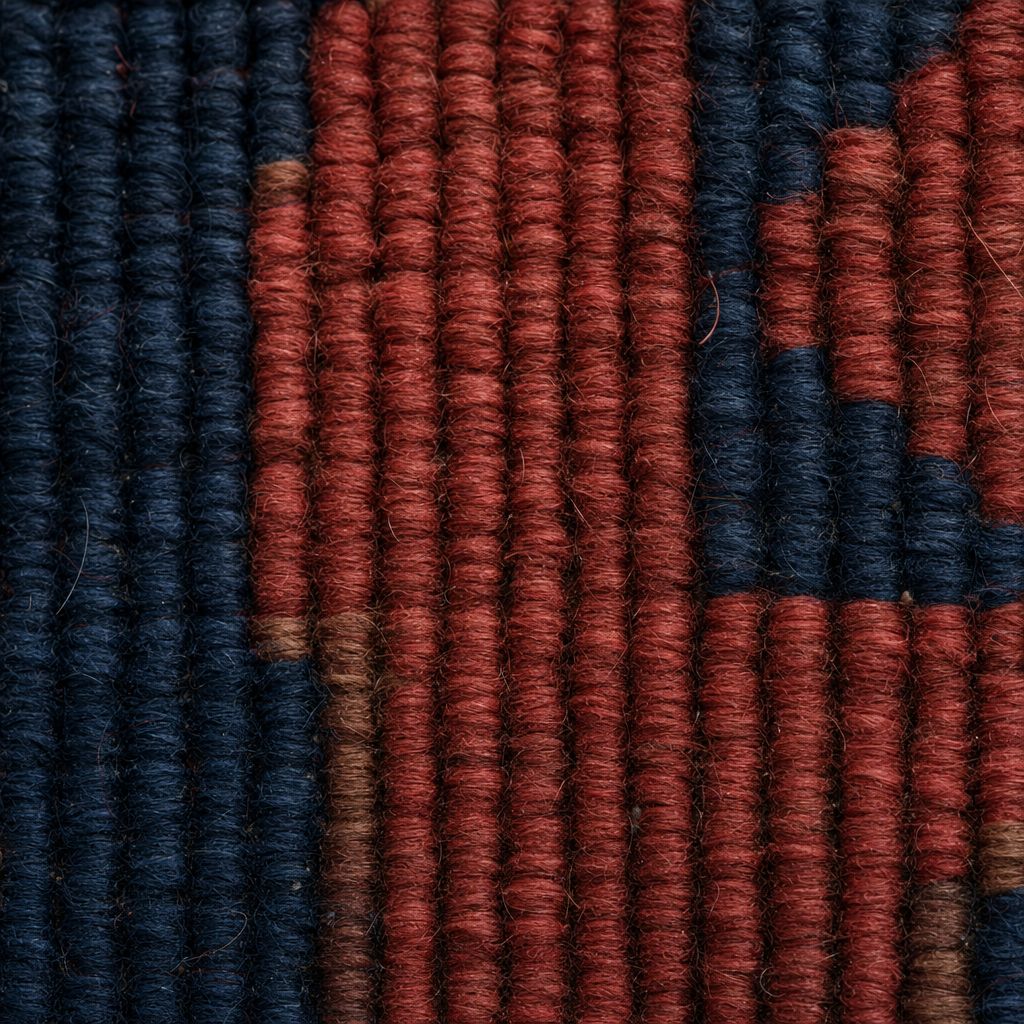
Most of what an object records is at a scale a photograph of the whole thing cannot show. These crops are the evidence the general description rests on.