Peoples and dynasties
The Uighurs: Turfan, the Silk Route and the Earliest Surviving Turkic Art
The moment a steppe people became an oasis one, and started keeping records. Within a few generations of losing their steppe empire the Uighurs were farming, lending at recorded rates of interest and supporting three religions in the same street, and the dry air of Turfan preserved what they made better than anywhere else in Central Asia.
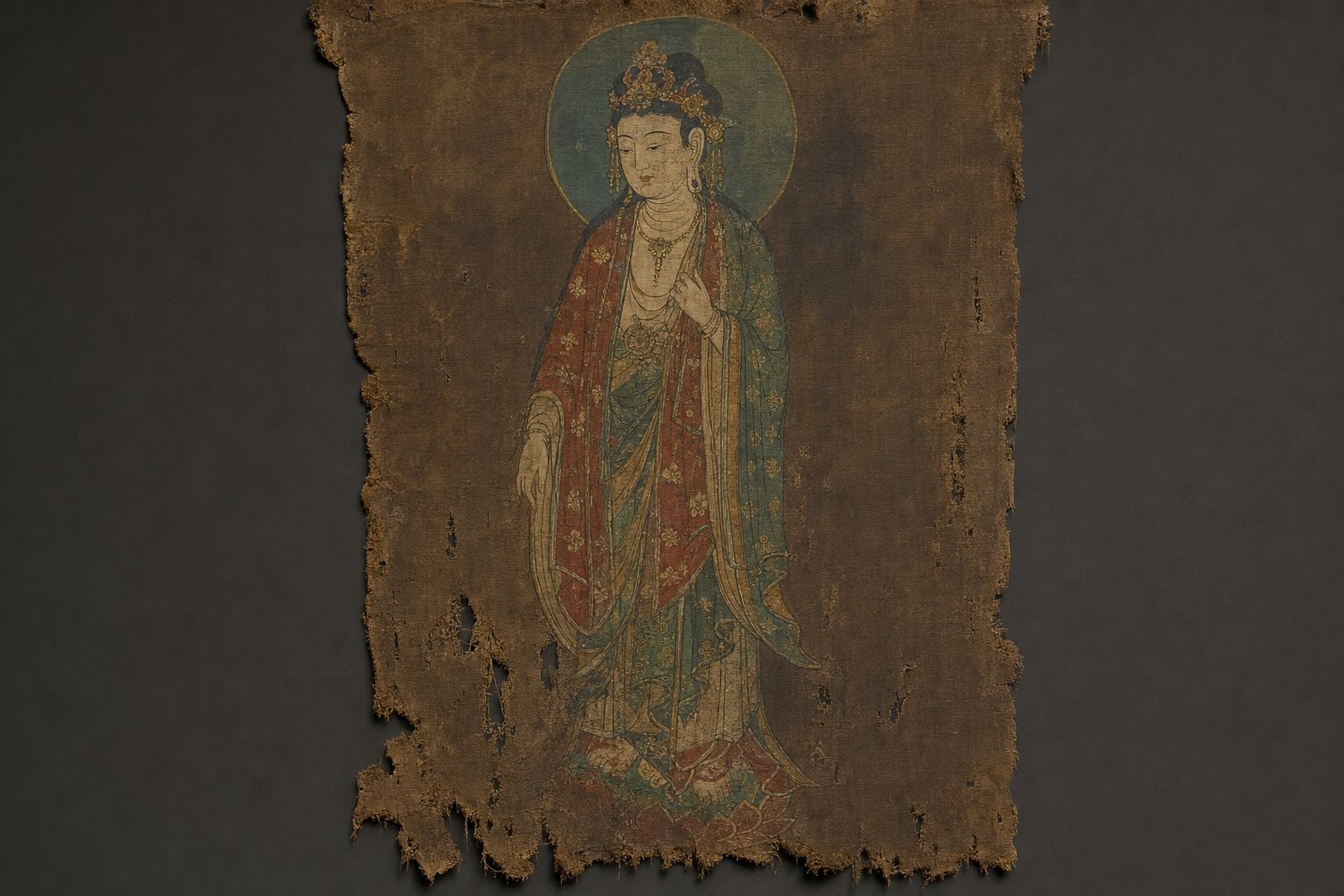
The Uighurs are the least familiar name in this sequence and the most important for understanding what follows. They are the point at which a Turkic-speaking people stopped moving, settled in towns, took up trade and letters, and built the first substantial body of Turkic art that survives in quantity.
From the steppe to the oases
The Uighur steppe empire, centred on the Orkhon valley in what is now Mongolia, lasted from 744 to 840. It ended abruptly when the Kirghiz took the capital. A large part of the population moved south and west, and one group settled in the oases along the northern edge of the Taklamakan, above all around Turfan.
Turfan is a difficult place to live and an excellent place to trade. It sits below sea level, it is irrigated by underground channels bringing meltwater from the mountains, and it lies on the northern arm of the route between China and the west. Within a few generations the Uighurs there were farming, running vineyards, lending money at interest and keeping written contracts.
The only Manichaean state
The Uighur ruling house adopted Manichaeism in 762, the only state in history to take it as official. In Turfan its communities lived alongside Buddhist monasteries and Christians of the Church of the East.
Three religions in one town
The Uighur ruling house had adopted Manichaeism in 762, which makes them the only state in history to take that religion as official. In Turfan, Manichaean communities coexisted with Buddhist monasteries and with Christians of the Church of the East. Documents in the region turn up in Uighur, Sogdian, Chinese, Sanskrit, Tocharian and Syriac.
This matters for the art because it means the same workshops were producing images for three different systems of belief. A Manichaean illuminated page and a Buddhist wall painting from the same town can share a palette, a way of drawing a face and a treatment of drapery.
What survives, and how
The dry climate preserved what a wetter one would have destroyed. Paper, silk, wood and painted plaster all survive from the Turfan region in quantities unmatched anywhere else in Central Asia. Most of what is now in European and Asian collections was removed during expeditions in the first decade of the twentieth century, often by cutting paintings off the walls.
The material includes silk banners, painted panels, illuminated manuscript fragments and large sections of temple wall painting. The donor figures are the most immediately striking: men and women in long belted coats with narrow sleeves, standing in rows, painted with individual faces and heavily patterned textiles.
How the wall paintings were made
The technique is consistent enough across the Turfan sites to describe as a method. A mud-and-straw plaster was laid over the wall, given a thin white ground, and drawn on in a red or black outline. Pigment was then applied flat within the outline, with almost no blending. Gold was used sparingly and applied last. Because the binder is organic and the plaster is soft, the paintings are extremely vulnerable once the climate changes, which is why so many of the removed fragments have deteriorated faster in museum storage than they did in the ground.
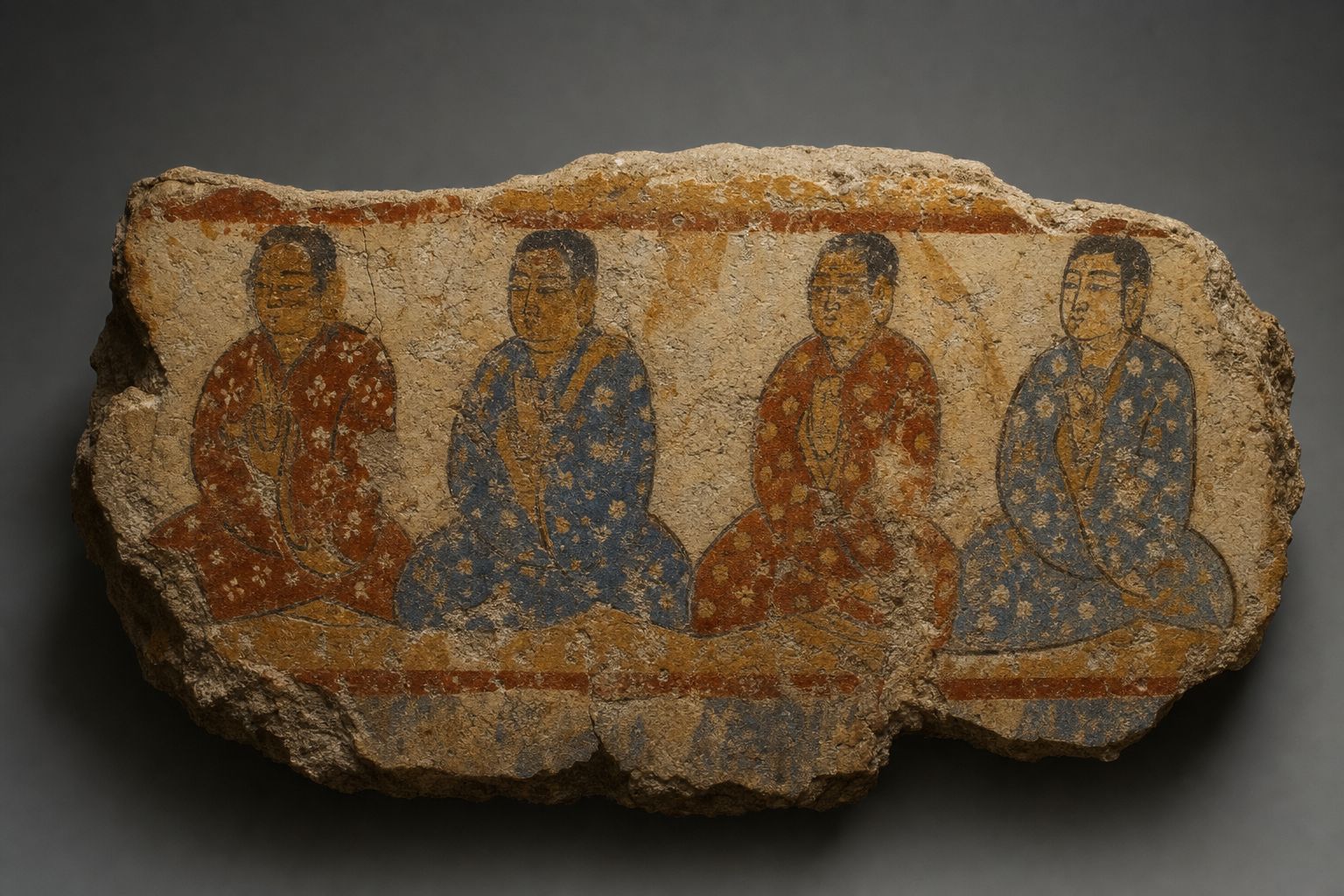
The Uighur script and what it carried
The Uighurs adapted the Sogdian alphabet into a script of their own, written vertically. It was later borrowed by the Mongols, and from Mongol it passed to Manchu, so a writing system developed in the Turfan oases was still in official use in Beijing in the nineteenth century.
Literacy is the reason the Uighurs punch above their weight in the record. When the Mongols needed administrators in the thirteenth century, they used Uighurs, who could read, write and count and who had experience of running a settled economy.
Trade, credit and the paperwork of an oasis
The Turfan documents are the least glamorous part of the material and among the most useful. They include loan contracts, land sales, slave sales, tax receipts, monastery inventories and private letters. Interest rates are recorded. Guarantors are named. Disputes are referred to identifiable officials.
What they describe is an economy running on credit, with silk and grain functioning as units of account alongside coin, and with monasteries acting as substantial landholders and lenders. None of that would be guessable from the paintings alone, and it is the reason the Uighur case is cited so often in economic history of the Silk Route.
What the Uighurs contributed to the thousand years
Two things. First, the demonstration that a steppe people could urbanise without dissolving into the population around it. Second, a set of visual habits, flat bright colour, dense patterning of clothing and background, faces treated as types rather than portraits, that recur in Turkic and Persianate painting for centuries afterwards.
The Seljuks who moved west two centuries later were a different people going in a different direction, but they were working within a visual world the Turfan workshops had helped to establish.
Common questions
Who were the Uighurs of the eighth to eleventh centuries?
A Turkic-speaking people who ruled a steppe empire from 744 to 840 and then, after its collapse, settled in the Silk Route oases around Turfan, where they became a settled, literate trading society.
What religions did they follow?
Manichaeism was adopted by the ruling house in 762. In the Turfan period Manichaean, Buddhist and Christian communities existed alongside one another, and the same workshops supplied all three.
Why is so much Uighur material preserved?
The extreme dryness of the Turfan depression. Paper, silk, wood and painted plaster survive there in quantities found almost nowhere else in Central Asia.
What is the relationship to the modern population of the same name?
The historical Uighur state and the Turfan oasis culture described here belong to the eighth to eleventh centuries. This site covers that period only, as part of the art history of the 600 to 1600 span.